The Immense Journey
1957
210 pages
Children's
Anthropologist blends his scientific knowledge with imaginative vision as he reflects on the journey of man in time.
Anthropologist blends his scientific knowledge with imaginative vision as he reflects on the journey of man in time.
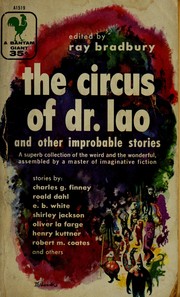
The circus of Dr. Lao, by C.G. Finney. The pond, by N. Kneale. The hour of letdown, by E.B. White. The wish, by R. Dahl. The summer people, by S. Jackson. Earth's holocaust, by Hawthorne. Buzby's petrified woman, by L. Eiseley. The resting place, by …
"In this book, the author examines what we as a species have become in the late twentieth century. His discussion is a synthesis of hard scientific theory, factual evidence, personal anecdotes, haunting reflection, and poetic prose." -- Publisher's description.
A collection of the author’s favorite essays and poems. This volume includes selections that span Eiseley’s entire writing career and provide a sampling of the author as naturalist, poet, scientist, and humanist. “Loren Eiseley’s work changed my life” -Ray Bradbury
"In All the Strange Hours, Eiseley turns his considerable powers of reflection and discovery on his own life to weave a compelling story, related with the modesty, grace, and keen eye for a telling anecdote that distinguish his work. His story begins with his childhood …
The gold wheel.-The places below.-Big eyes and small eyes.-Instruments of darkness.-The chresmologue.-Paw marks and buried towns.-Barbed wire and brown skulls.-The relic men.-Strangeness in the proportion.-The creature from the marsh.-One night's dying.-Obituary of a bone hunter.-The mind as nature.-The brown wasps.-Bibliography: (p.239-240).