The look-it-up book of mammals
1967
138 pages
Children's
An encyclopedia of mammals from A to Z, containing information on diet, size, area of habitation, and life span.
An encyclopedia of mammals from A to Z, containing information on diet, size, area of habitation, and life span.
A dictionary of terms for the telescope traveller in space. Includes maps of the night sky for the four seasons.
Explains the concept of a food chain and how plants, animals, and humans are ecologically linked.
An account of how and why Mount St. Helens erupted in May 1980 and the destruction it caused, and a discussion of the return of life to that area.
Traces the life of the pilot who became the first woman to fly across the Atlantic Ocean and mysteriously disappeared in 1937 while attempting to fly around the world.
Discusses the importance of trees as sources of food, oxygen, and other essential things.
Tells how hurricanes form, how scientists study them, and how they have affected the United States throughout this century.
An introduction to one of the curiosities of the sea--the multi-tentacled, highly intelligent octopus.
Describes the physical characteristics of a variety of snakes and how they hunt, catch, and eat their prey.
I bought this book when I was in 3rd grade in school in 1961. It is about a young boy and girl who spend the summer on the coast in Canada, and see mysterious lights at night across the bay at Black Rock Island. They …
Traces man's association with the house mouse from ancient times to current scientific research stressing the animal's importance as a laboratory animal.
Describes the 1994 discovery made in Chauvet, France, of a cave with Stone Age rock paintings, and discusses the significance of cave art to people living in prehistoric as well as modern times.
Summer of Fire Patricia Lauber Summary Setting: Summer of 1988 in Yellowstone National Park In the summer of 1988, there were many fires in Yellowstone National Park. At first, the fires were allowed to burn. Park rangers expected that the summer would be rainy as …
Discusses the truth behind such beliefs as "Cats can see in total darkness," "Cats have nine lives," and "A cat signals its feelings with its tail."
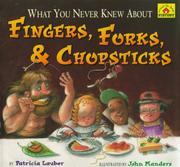
Describes changes in eating customs throughout the centuries and the origins of table manners.
Explains various changes in humanity's beliefs about the shape of the earth, from the flat earth theories of the ancients to the round earth theories which were proven true by the voyages of Columbus and Magellan.
Explains how the study of mummies, both natural and man-made, including a frozen baby mammoth found in Siberia and the human mummies of Egypt, Peru, and Denmark, can reveal information about ancient civilizations and prehistoric life.
Explains what earth scientists know about volcanoes and earthquakes.
Examines the life cycle of the alligator from egg to adult and analyzes its significance in the ecological balance of nature.
A collie known as Clown because of his antics, who would not learn to do his duty and take care of the sheep properly, proves his worth during a flood.
Describes the physiology of the earthworm and the useful services it performs for man.
Ten accounts of mysterious happenings at sea, including the disappearance of Amelia Earhart; the Mary Celeste, found sailing without a person on board, and the attempt to save a freighter which was carrying an unknown cargo of great value to an unnamed group of people.
Describes instances of dolphin friendship with humans, dolphin anatomy and life in the sea, care of their young, dolphins as pets and performers, and scientific experiments on their capacity to hear and communicate with one another.
Presents facts and tells of current scientific exploration and the challenges of various aspects of the earth: volcanoes, continents, mountains, the ocean floor, the origin of the planet, atmosphere, oceans, glaciers, and the sun.
An introduction to Clarence, the burglar-catching, television-watching, cod-liver oil-drinking dog.
Describes the characteristics and behavior of different kinds of whales and discusses why they are threatened by extinction.
Recreates life among the dinosaurs living in North America seventy-five million years ago.
Explains what elements make a forest and the parts they play, the growth of a tree, the importance of forests to man for their products and conservation effects, and ways in which man works to preserve the forests in the face of threats from fire …
Text and photographs describe the many different ways that seeds travel and disperse.
Text and photographs taken from space depict the nature, evolution, and future of Earth.
Discusses early theories about the solar system, the individual planets, the moon, the asteroids between Mars and Jupiter, and theories on the origin of the planets.
Clarence, a very friendly dog, finally finds a novel way of teaching the visiting Cat to be a perfect guest.
A history of the American cowboy and how he changed with the coming of barbed wire, railroads, and homesteaders. Also describes modern cattle ranching.
Discusses how fossilized remains of plants and animals reveal the characteristics of the prehistoric world.
Through accounts of some famous earthquakes, explains new scientific theories about the causes of earthquakes and how we can learn to live with them.
Describes the geography of Everglades National Park and the interrelationship of its unique plant and animal life.
An introduction to robots describing the many tasks they can perform at home and in industry and the things they might do in the future.
Explores the planets of our solar system, highlighting the prominent features of each.
Describes life at a school for cats, where the students learn to be "purrfect."
Tells of early man's first need to count, the influence of agriculture and herding on the development of the tally, and numerical systems from Egypt, Mesopotamia, China, Rome, and India.
" ... Take a look inside and discover the truth about our canine companions!"--Cover back.
Explains and enumerates the ways the seemingly solid earth changes--by earthquakes, volcanoes, and continental drift.
Examines the work of zoo veterinarians focusing on such cases as a tiger with a toothache, a gorilla with a cold, and a tortoise with a broken bone.
Discusses asteroids, comets, and meteorites, explaining where they come from, how they were formed, and what effect these voyagers from space have when they streak past the Earth or plummet to its surface.
Explains how teeth are clues to what animals eat and how they get their food.
Covers how light travels, lenses work, our eyes work and color can exist. Also examines ultraviolet and infared light.
Text and illustrations introduce a variety of eggs and the animals that hatch out of them. Includes ostrich, python, bullfrog, and monarch butterfly eggs among others.
Discusses how information on the settling and exploration of America before Columbus has been compiled from archaeological discoveries.
Describes the physical characteristics, life cycle, environment, and ecological role of the alligator.