
Standalone books

A history of the Crusades
Traces the holy war of 1202 during which zealous Crusaders, determined to liberate Jerusalem from Islam, rerouted to Constantinople, where over the course of two years they committed mass rape, murder, and destruction.

The fall of Constantinople, 1453
This classic account shows how the fall of Constantinople in May 1453, after a siege of several weeks, came as a bitter shock to Western Christendom. The city's plight had been neglected, and negligible help was sent in this crisis. To the Turks, victory not …

The Sicilian Vespers
On March 30, 1282, the Sicilian townsfolk of Palermo slaughtered the garrison and administration of their Angevin King. The massacre came at a climatic moment of thirteenth century Mediterranean history and its background is traced in this volume.


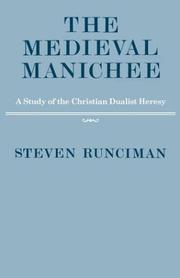
The medieval Manichee
"A reissue of Sir Steven Runciman's classic account of the Dualist heretic tradition in Christianity from its Gnostic origins, through Armenia, Byzantium, and the Balkans to its final flowering in Italy and Southern France. The chief danger that early Christianity had to face came from …




Mistra
"Mystras (Greek: ???????, ????????, Myzithras in the Chronicle of the Morea) is a fortified town and a former municipality in Laconia, Peloponnese, Greece. Since the 2011 local government reform it is part of the municipality Sparti, of which it is a municipal unit. Situated on …

The Byzantine theocracy
The constitution of the Byzantine Empire was based on the conviction that it was the earthly copy of the Kingdom of Heaven. Just as God ruled in Heaven, so the Emperor, made in his image, should rule on earth and carry out his commandments. This …


