Tendōsetsu no ehon
1979
49 pages
Children's
Discusses how medieval people viewed the world before it was widely understood and accepted that the world is round and rotates around the sun.
Discusses how medieval people viewed the world before it was widely understood and accepted that the world is round and rotates around the sun.
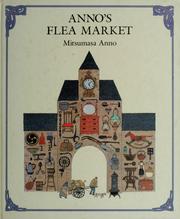
Depicts the treasures and trash of a flea market, one Saturday morning in the town square, as men, women, and children buy and sell everything imaginable.
Simple text and pictures introduce the mathematical concept of factorials.
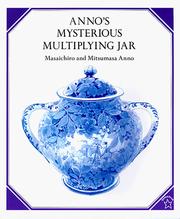
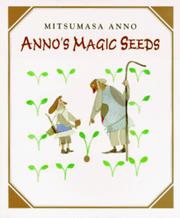
The reader is asked to perform a series of mathematical operations integrated into the story of a lazy man who plants magic seeds and reaps an increasingly abundant harvest.
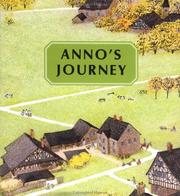
Told through brilliant illustrations, a colorful, wordless book takes young readers on a wonderous tour of northern Europe, seeing its landscape, geography, and architecture along the way.
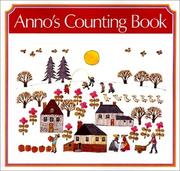
A counting book depicting the growth in a village and surrounding countryside during twelve months.
A counting book depicting the growth in a village and surrounding countryside during twelve months.
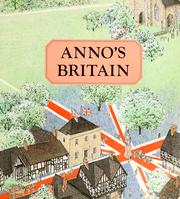
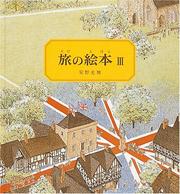
The illustrations lead the reader on a journey through Great Britain moving freely through time and space.
One by one, ten children move from their old house into their new house with all their possessions. Die-cut windows reveal the interiors of the houses and the book can also be read from back to front.
Mitsumasa Anno (安野 光雅 Anno Mitsumasa?, born 20 March 1926) is a Japanese illustrator and writer of children's books, known best for picture books with few or no words. He received the international Hans Christian Andersen Medal in 1984 for his "lasting contribution to children's …
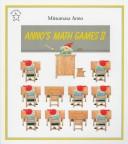
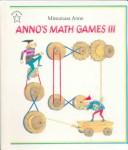
Picture puzzles, games, and simple activities introduce the mathematical concepts of multiplication, sequence and ordinal numbering, measurement, and direction.
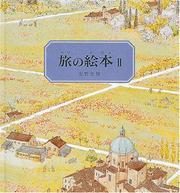
A pictorial presentation of rural, town, and city scenes in Italy, which contain hidden images from fine arts, religion, history, and folklore.
Presents an illustrated collection of Aesop's fables interwoven with Father Fox's own unique interpretations of the stories.
A wolf's attempt to figure out in which of five houses he is most likely to find one of three little pigs introduces such mathematical concepts as combinatorial analysis, permutations, and probabilities.
Optical illusions form structures in which curious little men can go up stairs to get to a lower place, hang pictures on the ceiling, and walk on walls.
Each letter of the alphabet accompanies a full-page picture puzzle of an object whose name begins with that letter: anvil, bicycle, etc.
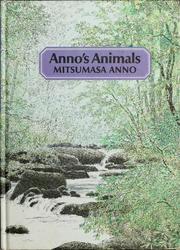
The reader is invited to find a variety of animals hidden amidst woodland scenes.
Mitsumasa Anno (安野 光雅 Anno Mitsumasa?, born 20 March 1926) is a Japanese illustrator and writer of children's books, known best for picture books with few or no words. He received the international Hans Christian Andersen Medal in 1984 for his "lasting contribution to children's …
The reader is asked to perform a series of mathematical operations integrated into the story of a lazy man who plants magic seeds and reaps an increasingly abundant harvest.
In the topsy-turvy land of cards everyone constantly quarrels as to who is really up and who is really down
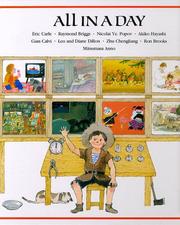
Brief text and illustrations by ten internationally well-known artists reveal a day in the lives of children in eight different countries showing the similarities and differences and emphasizing the commonality of humankind.
Figures from two sets of playing cards, each of which seems upside down to the other, pursue their queer and quacky quarreling, until one of the kings points out that it is all a matter of point of view.
The distorted letters of the alphabet become quite clear when viewed with the help of the silver tube included with the book.
Reproductions of 41 recent paintings and drawings accompanied by relevant captions chosen by the artist from works of literature, science, and philosophy.
Depicts familiar fruits and vegetables, including the strawberry, orange, watermelon, and green pea. Moving see-through plastic cards over the illustrations causes each fruit and vegetable to smile and frown.
Depicts the faces of familiar animals including bear, cat, rabbit, fox, and lion with two die-cut holes for the eyes of each animal for the reader to look through.
When the clocks strike twelve, the magical midnight circus begins. Pepe the clown will show you the way, but hurry--the circus vanishes at dawn.
Chaos descends on Shadowland when the watchman leaves his post to join a little match girl on a snowy street in the real world.
By turning half pages, the reader is invited to play a game of peekaboo with a variety of animals and people.
Presents two tales from the Brothers Grimm, combined with Mr. Fox's highly unusual interpretations of them.