Nikolaas "Niko" Tinbergen was a Dutch biologist and ornithologist who shared the 1973 Nobel Prize in Physiology or Medicine with Karl von Frisch and Konrad Lorenz for their discoveries concerning the organization and elicitation of individual and social behavior patterns in animals. He is regarded as one of the founders of ethology, the study of animal behaviour, and an important figure in the development of that discipline into its contemporary form, behavioral ecology.
From Wikipedia · CC BY-SA 4.0
10 books in our catalogue.
1968
301 pages
Science & Nature
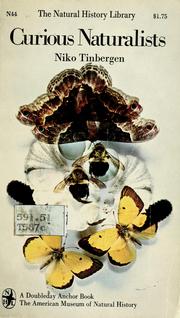
"This book describes the activities & some of the discoveries of a small number of naturalists who have joined me, at one time or another, in the pursuit of our common hobby; the study of the behaviour of animals in their natural environment. It covers …
1951
228 pages
Science & Nature
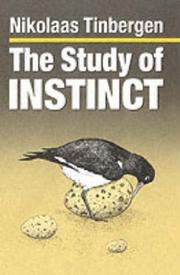
Nikolaas Tinbergen won a Nobel Prize in 1973 for his pioneering studies in animal behavior. The Study of Instinct, Tinbergen's first major work, introduced the subject of ethology to an American audience more than forty years ago, and it is still considered one of the …
1965
200 pages
Children's
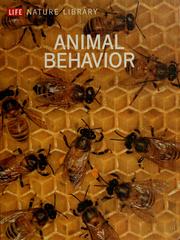
Modern students of animal behavior, among whom Dr. Tinbergen is a leader, have repeatedly shown that relatedness of different animal species is just as surely expressed by comparing their behavior patterns as by comparing their body forms. Being comparative, behavior study is not a field …
1983
362 pages
Psychology & Self-Help
1953
150 pages
This is the revised translation of the Dutch original Inleiding tot de diersociologie [Introduction to Animal Sociology] published in 1946. The 1st English edition was published in 1953, and went through several reprints: remarkable among them being the 1990 facsimile reprint, with a new foreword …
1982
657 pages
Language & Reference
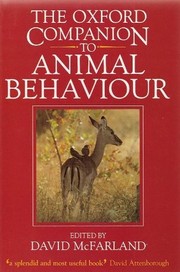
From the time of the cave dwellers, people have been fascinated by animal behavior. Until recently, though, philosophers, biologists and psychologists could only observe animals' physical traits and make assumptions about their behavior based on what was known about human behavior. Then, in 1973, a …