Vorlesungen zur Einführung in die Psychoanalyse
1916
480 pages
Psychology & Self-Help
500 p. ; 18 cm
500 p. ; 18 cm
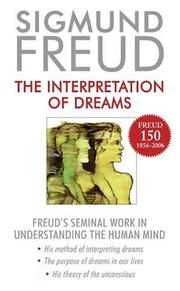
The Interpretation of Dreams is an 1899 book by Sigmund Freud, the founder of psychoanalysis, in which the author introduces his theory of the unconscious with respect to dream interpretation, and discusses what would later become the theory of the Oedipus complex. Freud revised the …
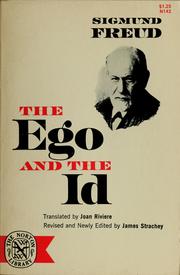
One of Freud's key works which, along with 'Introduction to Psychoanalysis' and 'The Ego and the Id' laid the basic framework for his theories of psychoanalysis.
496 pages, [8 pages of plates] : 20 cm
Observations of the Viennese psychoanalyst on curious plays on words that occur in dreams, and the unconscious sources of pleasure in jokes, wit, and humor.
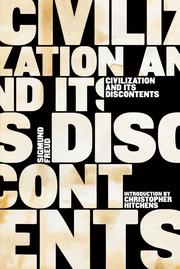
"Written in the decade before Freud’s death, Civilization and Its Discontents may be his most famous and most brilliant work. It has been praised, dissected, lambasted, interpreted, and reinterpreted. Originally published in 1930, it seeks to answer several questions fundamental to human society and its …
Presents a selection of the important writings of the nineteenth-century psychiatrist, including "Psychopathology of Everyday Life," "The Interpretation of Dreams," and "Totem and Taboo."
Includes index and glossary.
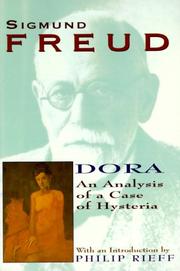
An appealing and intelligent 18-year-old girl to whom Freud gives the pseudonym "Dora" us the subject of a case history that has all of the intrigue and unexpected twists of a first-rate detective novel. Freud pursues the secrets of Dora's psyche by using clues as …
The Interpretation of Dreams is a book by Sigmund Freud. The first edition was first published in German in November 1899 as Die Traumdeutung (though post-dated as 1900 by the publisher). The publication inaugurated the theory of Freudian dream analysis, which activity Freud famously described …
Freud investigates the function and structure of totemic systems among primitive peoples and presents a psychoanalytical study of modern taboos.
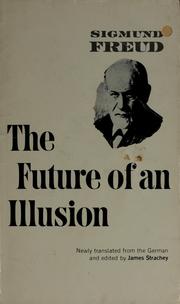
In what is considered one of his greatest contributions to psychology, Austrian psychiatrist, Sigmund Freud describes his perspectives on the development and origins of religion - religion as an illusion, wishes that are the "fulfillments of the oldest, strongest, and most urgent wishes of mankind." …
One of fifteen volumes in the new Freud series commissioned for Penguin by series editor Adam Phillips. Part of a plan to generate a new, non-specialist Freud for a wide readership, which goes way beyond the institutional/clinical market and presents material to the reader in …
"The traditional story about the historical origins of Freudian psychoanalysis implies that the Oedipus complex was part of Freudian theory from the very beginning. However, in this first edition of Three Essays on Sexuality, first published in 1905 and never before translated into English, we …
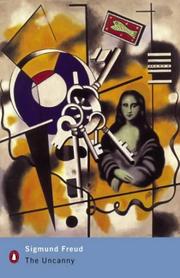
What might the world’s most notorious psychologist say about the mysterious expression of the Mona Lisa that has puzzled art critics for years? In Leonardo da Vinci Sigmund Freud psychoanalyzes the Renaissance painter. Freud explained, “Leonardo da Vinci was like a man who awoke too …
Some of the chapters of this book are: One of hte difficulties of ¨psycho-analysis, Dora, an analysis of a case of hysteria, Obsessive acts and religious practices, "Civilized" sexual morality and modern nervousness, the sexual enlightenment of children, Contributions to the psychology of love. Edited …
In this seminal book, Sigmund Freud enumerates the fundamental tensions between civilization and the individual. The primary friction stems from the individual's quest for instinctual freedom and civilization's contrary demand for conformity and instinctual repression. Many of humankind's primitive instincts (for example, the desire to …
Collection of 51 texts of Freud's writings spanning his entire career.
The Aetiology of Hysteria (German: Über die Ätiologie der Hysterie) is a paper by Sigmund Freud about the sexual abuse of children below the age of puberty and its possible causation of mental illness in adults. Presented in April 1896, it is where Freud first …
Presents Freud's classic study of the Moses legend and its role in the growth of Judaism and Christianity.
Freud's discovery of the preeminent role of sex in creating neuroses resulted in theories that changed the thinking of the world. He was a champion of greater sexual understanding in a society that only whispered the words he used out loud. This pioneering study of …
A translation of Freud's 1900 statement concerning his theory of the nature and mechanism of dreams.
This abridged edition makes the Freud/Jung correspondence accessible to a general readership at a time of renewed critical and historical reevaluation of the documentary roots of modern psychoanalysis. This edition reproduces William McGuire's definitive introduction, but does not contain the critical apparatus of the original …
É a correspondência trocada entre Einstein e Freud que se divulga neste livro, além de dois textos de Freud. Considerações actuais sobre a guerra e a mortre e Caducidade, tratando ambos da guerra, da violência - e da libertação do homem dos avatares da sua …
Harry Potter is a wizard. He is in his second year at Hogwarts School of Witchcraft and Wizardry. Little does he know that this year will be just as eventful as the last... (back cover)
En 1899 Freud publicaba por primera vez la obra que sería considerada como la más importante, representativa e influyente de su toda su producción: La interpretación de los sueños. Con ella daba inicio a una nueva disciplina, el psicoanálisis, que proponía el modo a través …
This volume brings together Freud's main contributions to the psychology of love. His illuminating discussions of the ways in which sexuality is always psychosexuality - that there is no sexuality without fantasy, conscious or unconscious - have changed the ways we think about erotic life. …
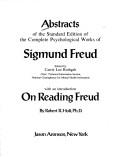
Over 600 abstracts (350 words each maximum) of all papers and editor's notes comprising and following the sequence of James Strachey's Standard edition. Arrangement corresponds with the 23 volumes of the original. The accession number assigned to each abstract relates the Tyson and Strachey Chronological …
In 'The Psychopathology of Everyday Life' Freud examines the psychological basis for the forgetting of names and words, the misuse of words in speech and in writing, and other similar errors. It is filled with anecdotes, many of them quite amusing, and virtually bereft of …
Ninguna teoria acerca del funcionamiento y estructura de la mente ha ejercido tanta influencia ni ha adquirido un estatus tan preponderante como la doctrina psicoanalitica, cuyas categorias y explicaciones no tardaron en convertirse en nucleo de un modo radicalmente nuevo de entender la realidad psiquica …
Consciente de los riesgos que podia suponer la insuficiente o inadecuada divulgacion de sus teorias y descubrimientos, Sigmund Freud (1856-1939) dedico siempre especial atencion y cuidado a esta tarea. Bajo el titulo generico de Esquema del psicoanalisis titulo dado a la recopilacion de las cinco …
"Sigmund Freud, the founder of psychoanalysis, declared that religion is a universal obsessional neurosis in his famous work of 1927, The Future of an Illusion. This work provoked immediate controversy and has continued to be an important reference for anyone interested in the intersection of …
Here are the essential ideas of psychoanalytic theory, including Freud's explanations of such concepts as the Id, Ego and Super-Ego, the Death Instinct and Pleasure Principle, along with classic case studies like that of the Wolf Man.Adam Phillips's marvellous selection provides an ideal overview of …
Despite Freud's enormous influence on twentieth-century interpretations of the humanities, there has never before been in English a complete collection of his writings on art and literature. These fourteen essays cover the entire range of his work on these subjects in chronological order, beginning with …
"In Freud's view we are driven by the desire for pleasure as well as by the desire to avoid pain. But the pursuit has never been a simple thing. Pleasure can be a form of fear, a form of memory and a way of avoiding …
Four essays on daydreaming, poetry, fairy-tales, etc., as potential dream material, including full text of W. Jensen's "Gradiva", a short novel which is analyzed in the title essay.
El malestar en la cultura, trabajo en el que Sigmund Freud (1856-1939) sentó que nuestra especie ha pagado por el progreso el elevado precio de sacrificar la vida instintiva y reprimir la espontaneidad, es, como señala Carlos Gómez en su introducción al mismo, uno de …
Presents a selection of Freud's letters, papers, and dream analysis on the use of coca and cocaine and their therapeutic applications.
"Soon after their first meeting in 1908, Freud's future biographer, Ernest Jones, initiated a correspondence with the founder of psychoanalysis that would continue until Freud's death in London in 1939. Jones, a Welsh-born neurologist, would become a principal player in the development of psychoanalysis in …
"The poet H. D. (1886-1961) underwent psychoanalysis with Sigmund Freud in Vienna during the spring of 1933 and again in the fall of 1934. She visited his famed study at 19 Berggasse daily, while outside Nazi thugs bullied their way through the streets - an …
These works were written against a background of war and racism. Freud sought the sources of conflict in the deepest memories of humankind, finding clear continuities between our 'primitive' past and 'civilized' modernity. In Totem and Taboo he explores institutions of tribal life, tracing analogies …
Includes 133 documents never before made public and 138 previously published only in part, this volume collects the complete correspondence of Freud to his closest friend during the period that saw the birth of psychoanalysis.
These translated lectures, originally delivered by Freud in two winters from 1915 to 1917 and in 1932, outline most of his theories, including dream interpretation and psychoanalytic therapy.
This collection of nearly 80 letters, written by Freud to his boyhood chum Eduard Silberstein over a ten-year period, attests to an early, whimsical life and to the existense of a deeply sensitive, observant youth. These letters will be a rich resource for scholars and …