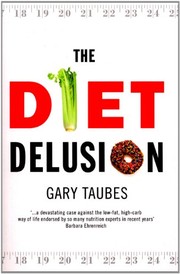
Gary Taubes is an American journalist, writer, and low-carbohydrate / high-fat (LCHF) diet advocate. His central claim is that carbohydrates, especially sugar and high-fructose corn syrup, overstimulate the secretion of insulin, causing the body to store fat in fat cells and the liver, and that it is primarily a high level of dietary carbohydrate consumption that accounts for obesity and other metabolic syndrome conditions.
From Wikipedia · CC BY-SA 4.0
10 books in our catalogue.
2007
330 pages
Science & Nature
In this groundbreaking book, the result of seven years of research in every science connected with the impact of nutrition on health, award-winning science writer Gary Taubes shows us that almost everything we believe about the nature of a healthy diet is wrong. For decades …
2016
365 pages
"From the best-selling author of Why We Get Fat, a groundbreaking, eye-opening expose that makes the convincing case that sugar is the tobacco of the new millennium: backed by powerful lobbies, entrenched in our lives, and making us very sick. Among Americans, diabetes is more …
2010
310 pages
This work is an examination of what makes us fat. In his book Good Calories, Bad Calories, the author, an acclaimed science writer argues that certain kinds of carbohydrates, not fats and not simply excess calories, have led to our current obesity epidemic. Now he …
2011
257 pages
This book is an eye-opening, myth-shattering examination of what makes us fat, from acclaimed science writer Gary Taubes. In his New York Times best seller, Good Calories, Bad Calories, Taubes argued that our diet's overemphasis on certain kinds of carbohydrates -- not fats and not …
2008
544 pages
Psychology & Self-Help
A brilliant debunking of the popular misconceptions on health and diet that also takes a hard look at the corporate world of the diet industry.Where mainstream nutritional science has demonised dietary fat for 50 years, hundreds of millions of dollars of research have failed to …
1993
503 pages
At 1:00 P.M., on March 23, 1989, two obscure scientists at the University of Utah announced that they had discovered salvation in a test tube - cold nuclear fusion. The technology promised sale, cheap, limitless energy, and the press played it as the scientific breakthrough …
1986
261 pages
Science & Nature