Standalone books
Must we mean what we say?
This is a remarkable, and now famous, volume of philosophical studies. The essays span and connect topics in the philosophy of language, aesthetics, and a criticism of literature, drama and music. The style and the range and integration of interests are alike individual, ambitious and …
The Senses of Walden
Stanley Cavell, one of America’s most distinguished philosophers, has written an invaluable companion volume to Walden, a seminal book in our cultural heritage. (Source: De Gruyter Brill)
Contesting Tears
What is marriage? Can a relationship dedicated to equality, friendship, and mutual education flower in an atmosphere of romance? What are the paths between loving another and knowing another? Stanley Cavell identified a genre of classic American films that engaged these questions in his study …
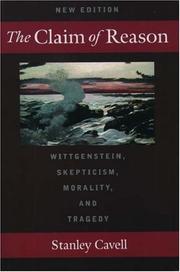
The claim of reason
"This new edition of Stanley Cavell's landmark text, first published 20 years ago, provides a new preface that discusses the reception and influence of his work, which occupies a unique niche between philosophy and literary studies."--Jacket.
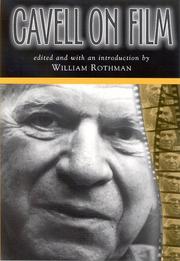
Cavell on film
"This extensive collection offers a substantially complete retrospective of Stanley Cavell's previously uncollected writings on film. Cavell is the only major philosopher in the Anglo-American tradition who has made film a central concern of his work, and his work offers inspiration and new directions to …
The world viewed
What is film? Why are movies important? Why do we care about them in the way we do? How do we think of the connections between the projected image and what it is actually an image of? Most movie-goers assume that they are entitled to …

Philosophy and animal life
"Philosophy and Animal Life offers a new way of thinking about animal rights, our obligation to animals, and the nature of philosophy itself. It is a crucial collection for those interested in animal rights, ethics, and the development of philosophical inquiry. It also offers a …
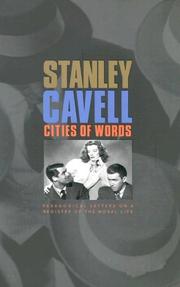

Little did I know
An autobiography in the form of a philosophical diary, Little Did I Know's underlying motive is to describe the events of a life that produced the kind of writing associated with Stanley Cavell's name. Cavell recounts his journey from early childhood in Atlanta, Georgia, through …
Pursuits of happiness
Looks at seven classic romantic comedies of the thirties and forties, and compares what each film expresses about marriage, interdependence, equality, and sexual roles.