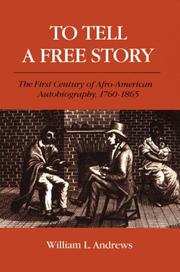
William Leake Andrews is an American Professor Emeritus of English at The University of North Carolina at Chapel Hill and a scholar of early African-American literature. With books such as To Tell a Free Story: The First Century of Afro-American Autobiography, 1760–1865 (1986), Andrews helped establish the academic study of African-American literature in the late twentieth century. In 2017, Andrews received the Jay B. Hubbell Medal for Lifetime Achievement in American Literature from the Modern Language Association.
From Wikipedia · CC BY-SA 4.0
20 books in our catalogue.
2003
464 pages
Biography & Memoir
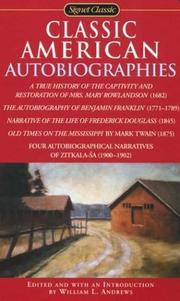
A True History of the Captivity and Restoration of Mrs. Mary Rowlandson (1682), perhaps the first American bestseller, recounts this thirty-nine-year-old woman's harrowing months as the captive of Narragansett Indians. The Autobiography of Benjamin Franklin (1771-1789), the most famous of all American autobiographies, gives a …
1998
232 pages
General Fiction
2000
1035 pages
Biography & MemoirPolitics & Society
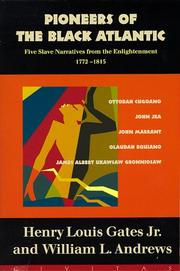
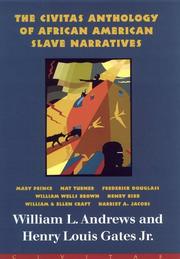
"Included are narratives by James Albert Ukawsaw Gronniosaw (1772) and Olaudah Equiano (1789), who were taken from Africa as children and brought across the Atlantic to British North America. The Confessions of Nat Turner (1831) provides unique insight into the man who led the deadliest …
1990
368 pages
General Fiction
2001
500 pages
Language & ReferencePolitics & Society
1997
866 pages
Language & ReferencePolitics & Society
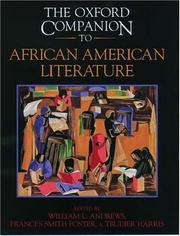
The Oxford Companion to African American Literature provides the first comprehensive one-volume reference work devoted to this rich tradition, surveying the length and breadth of black literary history, focusing in particular on the lives and careers of more than 400 writers. Here, too, are general …
1986
361 pages
Biography & MemoirPolitics & Society
Discusses the writings of Richard Allen, Solomon Bayley, Henry Bibb, Henry Box Brown, John Brown, Leonard Black, William Wells Brown, Lewis Clarke, William Craft, Frederick Douglass, Martin R. Delany, Olaudah Equiano, Moses Grandy, Jacob D. Green, William Grimes, James A.U. Gronniosaw, Briton Hammon, Josiah Henson, …
1993
231 pages
Biography & MemoirPolitics & Society
1990
232 pages
Biography & MemoirHistoryPolitics & Society
Contains primary source material.
2003
279 pages
Biography & MemoirHistoryPolitics & Society
1998
439 pages
Biography & MemoirHistoryPolitics & Society
In the 18th century a small group of black men defied the prohibition on learning and mastered the arts and sciences thereby writing themselves into history. Their autobiographies were published in the late 18th and early 19th centuries.
2003
217 pages
Biography & Memoir
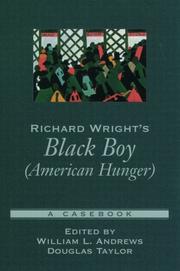
This casebook reprints a selection of important and representative reviews, criticism and scholarly analysis of Richard Wright's 'Black Boy (American Hunger): A Record of Childhood and Youth' (1991).
1986
245 pages
Biography & MemoirPhilosophy & ReligionPolitics & Society
1999
642 pages
Biography & MemoirPolitics & Society
Hailed in 1849 as "a new department in the literature of civilization," the slave narrative forms the foundation of the African American literary tradition. From the late eighteenth-century narratives by Africans who endured the harrowing Middle Passage, through the classic American fugitive slave narratives of …
2006
314 pages
Politics & Society
1991
367 pages
Biography & MemoirHistoryPolitics & Society