The rise of African slavery in the Americas
"Why were the countries with the most developed institutions of individual freedom also the leaders in establishing the most exploitative system of slavery that the world has ever seen? In seeking to provide new answers to this question, The Rise of African Slavery in the …

Extending the frontiers
"The essays in this book provide statistical analysis of the transatlantic slave trade, focusing especially on Brazil and Portugal, from the 17th through the 19th century. It contains the most up-to-date and comprehensive research on slave ship voyages, origins, destinations, numbers of slaves per port, …


The military revolution in sixteenth-century Europe
This ground-breaking study represents a new twist in the already complicated debate on military change in the early modern period. Previous writers have for the most part defined a 'military revolution' focused on the seventeenth or even early eighteenth centuries. Eltis suggests that key developments …
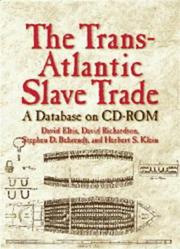
Trans-Atlantic Slave Trade
Contains records of 27,233 trans-Atlantic slave ship voyages made between 1595 and 1866. Format allows users to track information by time period and geographic region, and includes interactive maps that allow viewers to chart the trans-Atlantic connections. The accompanying data contains materials about people on …

Human capital and institutions
"Human Capital and Institutions is concerned with human capital in its many dimensions and brings to the fore the role of political, social, and economic institutions in human capital formation and economic growth. Written by leading economic historians, including pioneers in historical research on human …