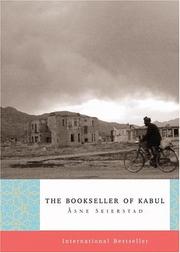
Åsne Seierstad is a Norwegian freelance journalist and writer, best known for her accounts of everyday life in war zones – most notably Kabul after 2001, Baghdad in 2002 and the ruined Grozny in 2006.
From Wikipedia · CC BY-SA 4.0
12 books in our catalogue.
2002
288 pages
General Fiction
Two weeks after September 11th, award-winning journalist Asne Seierstad went to Afghanistan to report on the conflict there. In the following spring she returned to live with an Afghan family for several months. For more than twenty years Sultan Khan defied the authorities - be …
2008
352 pages
HistoryPolitics & SocietyTravel
In the early hours of New Year's 1994, Russian troops invaded the Republic of Chechnya, plunging the country into a prolonged and bloody conflict that continues to this day. A foreign correspondent in Moscow at the time, Åsne Seierstad traveled regularly to Chechnya to report …
2004
327 pages
Biography & MemoirPolitics & Society
A Hundred and One Days is a fascinating and insightful account of the Iraq War. The author details the frustrations and dangers journalists faced trying to uncover the truth behind the all-pervasive propaganda, as well as a portrait of Baghdad and its people.
2004
321 pages
Biography & MemoirPolitics & Society
"For one hundred and one days - from January until April 2003 - Asne Seierstad worked as a reporter in Baghdad for Scandinavian, German, and Dutch media. Through her articles and live television coverage she reported on the events in Iraq before, during, and after …
2018
432 pages
The riveting story of two sisters' journey to the Islamic State and the father who tries to bring them home. Asne Seierstad puts the problem of radicalization into painfully human terms, using instant messages and other primary sources to reconstruct a family's crisis from the …
2007
315 pages
Politics & Society
2013
532 pages
"On July 22, 2011, Anders Behring Breivik detonated a bomb outside the Norwegian prime minister's office in central Oslo, killing eight people. He then proceeded to a youth camp on the wooded island of Utøya, where he killed sixty-nine more, most of them teenage members …