
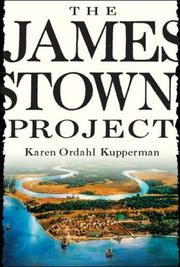
The Jamestown Project
"Reconfiguring the national myth of Jamestown's failure [Karen Kupperman] shows how the settlement's distinctly messy first decade actually represents a period of ferment in which individuals were learning how to make a colony work ... the structures and practices that evolved through trial and error …
Indians and English
"In this vividly written book, prize-winning author Karen Ordahl Kupperman refocuses our understanding of encounters between English venturers and Algonquians all along the East Coast of North America in the early years of contact and settlement. All parties in these dramas were uncertain--hopeful and fearful--about …

Providence Island, 16301641
"Thoroughly researched account of attempt by English Protestants to establish colony on Old Providence Island (Santa Catalina, off the coast of Nicaragua). Planted in 1630, colony failed to prosper for reasons author develops with clarity and erudition, and was wiped out by the Spanish in …

Roanoke, the abandoned colony
In Roanoke: The Abandoned Colony, Karen Ordahl Kupperman recounts one of the most gripping stories in American history. Writing from a background in both Indian and English history, she movingly describes the first English colony in America and places it within the context of the …


America in European Consciousness, 1493-1750 (Published by the Omohundro Institute of Early American History and Culture and the University of North Carolina Press)
For review see: Stephen J. Homick, in The Hispanic Historical Review (HAHR), vol. 77, no. 1 (February 1997); p. 78-80.

Pocahontas and the English Boys
In Pocahontas and the English Boys, the esteemed historian Karen Ordahl Kupperman shifts the lens on the well-known narrative of Virginia's founding to reveal the previously untold and utterly compelling story of the youths who, often unwillingly, entered into cross-cultural relationships--and became essential for the …

