John Alfred Terraine, FRHistS was an English military historian and TV screenwriter. He is best known as the lead screenwriter for the landmark 1960s BBC-TV documentary The Great War, about the First World War, and for his defence of British General Douglas Haig – who commanded the British Expeditionary Force on the Western Front from late 1915 until the end of the war – against charges that he was "The Butcher of the Somme".
From Wikipedia · CC BY-SA 4.0
17 books in our catalogue.
1919
216 pages
Historical Fiction
A.P. Herbert tells the story of an idealistic, young officer called Harry Penrose. First in Gallipoli, then in the trenches of France, he is tested and brought to breaking point as he battles to retain the ideals of military glory, duty and courage amidst the …
1978
283 pages
History
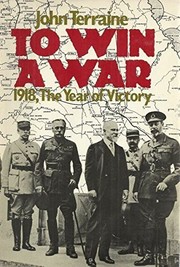
This book is a classic narrative history of the last year of the First World War. Author John Terraine was associate producer and chief screenwriter of the 1963‒64 BBC TV documentary The Great War. He was the founder and President of the Western Front Association, …
1968
202 pages
Biography & Memoir
Relive the 20th century through the eyes and words of Lord Mountbatten – a member of the Royal family and one of Britain's most highly decorated naval officers. This extraordinary volume spans 70 years of triumph, conflict and glory in the life of this remarkable …
1985
828 pages
History
Here for the first time in one volume is the story of the RAF’s achievement in World War II, from its birth as a modern air force in the 1930s to its triumphant finish with over 9,000 aircraft and over a million officers and men. …
1964
230 pages
History
John Terraine, perhaps the most distinguished historian of the First World War, addresses a number of particular topics in this collection of fascinating essays. The author's lucid style stands out in making this book a model of accurate, well-argued and readable military history.'John Terraine's nine …
1990
518 pages
Biography & MemoirHistory
1970
227 pages
History
The impacts of war are limitless, and in many respects unfathomable. In the First World War, four broad levels of impact upon Britain may be discerned: impact upon the soldiers and sailors in the battle line - the most severe; impact upon the military leaders …
1963
508 pages
History
Douglas Haig, Commander-in-Chief of the British Expeditionary Force in World War I, has been called a stupid, callous, and snobbish intriguer, and many historians have held him responsible for the horrors and shocking loss of life in trench warfare. Now, however. Field Marshal Haig has …