Amy Lynn Chua is an American legal scholar, corporate lawyer, and writer. She is the John M. Duff Jr. Professor of Law at Yale Law School with an expertise in international business transactions, law and development, ethnic conflict, and globalization. She joined the Yale faculty in 2001 after teaching at Duke Law School for seven years. Prior to teaching, she was a corporate law associate at Cleary, Gottlieb, Steen & Hamilton.
From Wikipedia · CC BY-SA 4.0
8 books in our catalogue.
2011
268 pages
★ 3.90 · 10
Biography & MemoirPolitics & Society
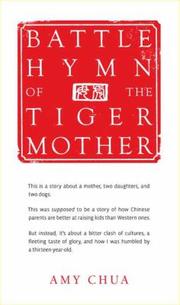
Amy Chua's daughters, Sophia and Louisa (Lulu) were polite, interesting and helpful; they had perfect school marks and exceptional abilities. The Chinese parenting model certainly seemed to produce results. But what happens when a screaming child, who would sooner freeze outside in the cold than …
2007
414 pages
History
In a little over two centuries, America has grown from a regional power to a superpower, and to what is today called a hyperpower. But can America retain its position as the world's dominant power, or has it already begun to decline?Historians have debated the …
2003
346 pages
Business & EconomicsPolitics & Society
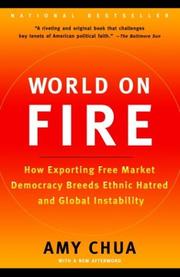
The New York Times bestseller. In the current affairs/globalisation tradition of Naomi Klein and Noreena Hertz; the most original contribution to the globalisation debate in years.Amy Chua's remarkable and provocative book explores the tensions of the post-Cold War globalising world. As global markets open, ethnic …
2014
336 pages
Psychology & Self-Help
"It may be taboo to say, but some groups in America do better than others.Why do some groups rise? Drawing on groundbreaking original research and startling statistics, The Triple Package uncovers the secret to their success. A superiority complex, insecurity, impulse control--these are the elements …
2018
293 pages
Politics & Society
Discusses the failure of America's political elites to recognize how group identities drive politics both at home and abroad, and outlines recommendations for reversing the country's foreign policy failures and overcoming destructive political tribalism at home.
2014
Psychology & Self-Help
2023
180 pages
Mystery & Thriller
Looking for a new book that will make your heart race? The ninth edition of The Minotaur Sampler compiles the beginnings of six can't-miss novels--either standalone or first in series--publishing Fall 2023 for free for easy sampling. Standalone: With over three million copies sold worldwide, …