19 books in our catalogue.
2005
310 pages
Biography & Memoir
In a memoir of growing up in Washington, D.C., during the 1940s and 1950s, the author of "Gentleman's Blood" and "Hail to the Chiefs" gives a sharp-eyed look at history, as well as insights into her own life.
1995
175 pages
Psychology & Self-Help
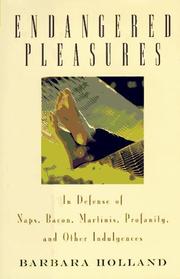
Barbara Holland takes up arms against America's current ethic of industrious virtue. We work longer than we did twenty years ago and eat more vegetables, but why get rich and live forever if our lives are gray and arduous? Holland persuades us to notice and …
1977
125 pages
Children's
A young girl wins a pony in a contest and throws her entire suburban neighborhood into an uproar.
2001
281 pages
Biography & Memoir
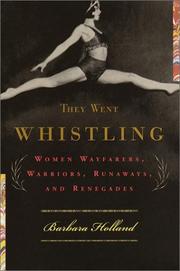
"Women weren't supposed to take their lives into their own hands, light out by themselves, have independent, off-the-beaten path adventures. Nonetheless, throughout history there have been women who cast off the shackles of expectation, stepped out of the cave, and slashed their way into history. …
1997
210 pages
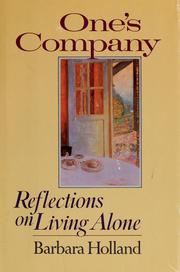
In 1990, Barbara Holland inherited her mother's summer cabin in the northern Blue Ridge Mountains. She quit her job in Philadelphia, said good-bye to friends and family, and moved into a different world. On the mountain she wrestled with winter isolation, stoked the woodstove, and …
1989
220 pages
FantasyHistory
1980
190 pages
Biography & Memoir
1999
235 pages
According to Barbara Holland, the world is going to seed. In Wasn't the Grass Greener?, she shares thirty-three reasons why life at the end of the millennium just isn't as good as it used to be. And after you read her rollicking remembrances of things …
1990
278 pages
Biography & MemoirHumour
1979
122 pages
Children's
Two friends, one confident and the other timid, find their positions reversed when they must plot to escape kidnappers.
1979
121 pages
General Fiction
1985
109 pages
Children's
A young boy finds that it is up to him to shield his sister and baby nephew from her quick-tempered husband, recently released from prison.
1997
273 pages
Biography & Memoir
1985
272 pages
Politics & Society