Greil Marcus is an American author, music journalist and cultural critic. He is notable for producing scholarly and literary essays that place rock music in a broader framework of culture and politics.
From Wikipedia · CC BY-SA 4.0
24 books in our catalogue.
1975
320 pages
Art & PhotographyBiography & MemoirPolitics & Society
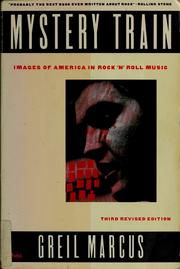
When it was first published, critic after critic called this brilliant study of rock 'n' roll and American culture the best book on the subject. Now, firmly established as a classic, the fourth edition features a completely new introduction as well as an entirely updated …
1989
496 pages
Art & PhotographyComics & Graphic NovelsHistory
Explores the avant-garde history of twentieth-century Europe through the lifestyle and music of the Sex Pistols.
1991
245 pages
Politics & Society
Dead Elvis: A Chronicle of a Cultural Obsession (1991) is a non-fiction book by American rock-music critic Greil Marcus in which he examines the influence of Elvis Presley on United States culture in the latter half of the 1970s.
1997
224 pages
Art & PhotographyHistory
Uniting a roster of authors chosen from wide-ranging disciplines, this study is the first to examine the influence of Disneyland on both our built environment and our architectural imagination. Tracing the relationship of the Disney parks to their historical forebears, it charts Disneyland's evolution from …
2004
191 pages
Biography & Memoir
"Guy Debord, as founding member and pivotal figure of the Situationist International, pursued one of the twentieth century's most arch and exciting assaults on modern life. His 1967 Society of the Spectacle (followed, twenty years later, by Comments on the Society of the Spectacle) was …
1997
288 pages
Art & PhotographyBiography & MemoirPolitics & Society
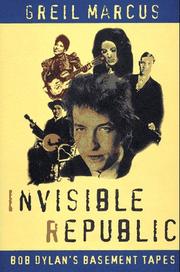
Invisible Republic is Greil Marcus's long-awaited book on the scores of legendary recordings Bob Dylan and the Band made near Woodstock, New York, in 1967, in the basement of a house called Big Pink - music that remains as seductive and baffling today as it …
2001
304 pages
Art & Photography
1993
438 pages
Art & PhotographyPolitics & Society
2010
498 pages
Art & PhotographyPolitics & Society
2011
210 pages
Art & Photography
Insightful evaluation of the group's music.
2014
314 pages
Art & Photography
Selects ten songs recorded between 1956 and 2008 that embody rock and roll as a thing in itself--in the story each song tells, inhabits, and creates in its legacy.
2006
320 pages
Language & ReferencePolitics & Society
"In The Shape of Things to Come, Greil Marcus traces America's fable of self-invention from its Puritan beginnings to its successive retelling in the work of contemporary artists as diverse as Philip Roth and David Lynch. While artists rather than politicians struggle to define what …
2009
1112 pages
America is a nation making itself up as it goes along--a story of discovery and invention unfolding in speeches and images, letters and poetry, unprecedented feats of scholarship and imagination. In these myriad, multiform, endlessly changing expressions of the American experience, the authors and editors …
2002
88 pages
Greil Marcus casts his unique critical eye on this headlong fall through the looking-glass of American politics and what he claims to be the most deeply prophetic film of the second half of the American century.
2000
248 pages
Politics & Society
"In Double Trouble Greil Marcus draws on articles he published from 1992 to 2000 to explore the remarkable and illuminating kinship between Bill Clinton and Elvis Presley. In a cultural landscape where ideals and choices are increasingly compromised, the constantly mutating representations of Clinton and …
2022
288 pages
Art & Photography
2008
432 pages
Art & PhotographyBiography & MemoirPolitics & Society
"Focusing on a handful of performers - Harmonica Frank, Robert Johnson, the Band, Sly Stone, Randy Newman, and Elvis Presley - Greil Marcus opens up the American story of ambition and defeat, dreams and lies. This fifth edition includes an updated version of the ever-expanding …
1969
182 pages
Art & Photography
1995
274 pages
HistoryPolitics & Society
It is the history in the riff, in the movie or novel or photograph, in the actor's pose or critic's posturing - in short, the history is cultural happenstance - that Marcus reveals here, exposing along the way the distortions and denials that keep us …
2010
195 pages
Art & Photography