The moon seems to change
1960
32 pages
Children's
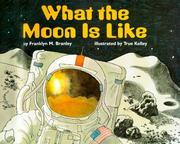
Discusses the size, distance from the earth, and physical characteristics of the moon. Explains the reasons for the phases of the moon.
Discusses the size, distance from the earth, and physical characteristics of the moon. Explains the reasons for the phases of the moon.
Explains how and why a thunderstorm occurs and gives safety steps to follow when lightning is flashing.
Discusses the characteristics of each of the nine planets and explains the techniques used in the discovery and study of them.
Describes the sun and how it provides the light and energy which allow plant and animal life to exist on the earth.
Discusses some of the lesser-known astronomical phenomena such as meteorites, asteroids, tektites, zodiacal light, solar wind, and cosmic rays.
An explanation of the nature of the electromagnetic spectrum, the scientific investigations that led to our understanding of it, and its role as a tool of science.
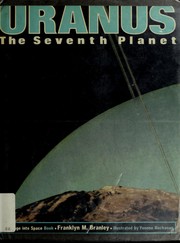
Describes the physical characteristics, movements, satellites, and other features of Uranus, with an emphasis on recent discoveries from Project Voyager.
Describes the nature and origin of supernovas, how they provide information on the formation of stars and planets, and what was learned from study of Supernova 1987A.
Details the activities of the American Voyager 2 space probe as it made its 1989 flyby of Neptune and its moons. Discusses the eighth planet's orbit, atmosphere, rings, and geology.
Describes the topography and motions of the planet Venus, explains theories about its origin and evolution, and presents recent discoveries made by the Magellan spacecraft.
A simple explanation of how the rotation of the earth causes night and day.
Explains how to view stars and ways to locate star pictures, known as constellations, throughout the year.
Explains in simple text and illustrations what is known about the force of gravity.
Describes how sunshine and the tilt of the earth's axis are responsible for the changing seasons.
Describes how magnets work and includes instructions for making a magnet and a compass.
Explains solar energy and its use in solar water heaters, heat pumps, cookers, water distillers, and controlled photosynthesis. Includes simple experiments testing new solar energy theories.
This is a children's book written in story/narrative style to explain how in simple terms how magnets work.
Describes the nine planets and other bodies of the solar system; includes directions for making models showing the size of the planets and their distance from the sun.
Explains how the water cycle leads to different types of weather patterns.
Explains how volcanoes are formed and how they affect the earth when they erupt.
Discusses why earthquakes happen, what their sometimes devastating effects can be, where the danger zones are, and what measures people can take to safeguard themselves.
Explains basic facts about the Big Dipper, including which stars make up the constellation, how its position changes in the sky, and how it points to the North Star.
Describes the characteristics of snow, its usefulness to plants and animals, and the hazards it can cause.
Describes the various properties of air and shows how to prove that air takes up space and that there is air dissolved in water.
Basic information about the ancient roots of astrology and the beliefs of astrologers today, with directions for casting your own horoscope.
Describes the origin and nature of tornadoes and how to stay safe when threatened by one of these dangerous storms.
Examines life aboard a space shuttle, describing how astronauts deal with weightlessness, how they eat and exercise, some of the work they do, and more.
Explains in simple terms what happens during a solar eclipse.
"The air that surrounds Earth weigh 5 quadrillion tons. When it moves slowly, there's a breeze. When it blows very fast—74 miles an hour or faster—there's a hurricane. How does a hurricane begin? What should you do when you know a hurricane is coming? Franklyn …
Discusses some of the ideas and misconceptions about life in outer space and speculates on the existence of such life in light of recent space explorations.
A brief introduction to the importance of oxygen in maintaining plant and animal life.
Discusses the properties of light, particularly its source in heat.
A brief explanation of the fact that sound is vibration, using examples from everyday life and simple experiments.
Introduces the principles of the metric system through simple experiments.
A simple explanation of the water cycle, clouds, water vapor, condensation, evaporation, rain, and hail.
Simple text with illustrations explains rockets and satellites and describes their capabilities and functions.
Explains how to recognize footprints found in the earth, sand and snow, made by animals, birds, insects and humans without shoes. Grades 1-3.
Explains what comets are, how they are formed, and how their unusual orbits bring them into earth's view at predictable intervals, with a special focus on Halley's comet
Combines the efforts of several modern scientists to explain the ancient mystery of Stonehenge; who built it and why? How was it built and when?
Discusses sightings of flying saucers or UFO, Unidentified Flying Objects, and possible explanations of these phenomena.
Invitation to look, to ask and to learn— "What ... how ... why ...?" especially "why"! Do countless questions, asked and unasked, occur to you about our amazing universe? Then this book is for you! No, it isn't a book of answers. Many articles in …
Discusses the sun and the solar system, comparing how they were perceived in earlier times with what is known about them now.
A basic book describing the size, temperature, and other important features of the nine planets that go around our sun.
Brief explanations of galaxies, light years, and nebulae. Gives facts about stars--their sizes, density, elements, temperature, movement, and the distances between them.
Explains the basic composition of color, how it is created and used, and its psychological effects.
Simple experiments, using easily obtainable equipment, designed to explain the scientific laws pertaining to rocket research and space travel.
Explains present and future methods and technology used for the exploration of space and the search for life on other planets.
Discusses the various theories concerning the creation, expansion, and possible end of the universe. Also defines such phenomena as black holes, neutrons, pulsars, red shifts, and other discoveries that further enhance our knowledge of the world beyond our planet.
Explains what shooting stars are, what they are made of, and what happens to them when they land on Earth.
Describes what may have happened when the earth began billions of years ago.
Explains the construction and purpose of the International Space Station and the life of the astronauts on board.
Explains simply some basic principles involved in space flight.
Describes various scientific theories which explore the extinction of the dinosaurs.