Monde en cours. Intervention


Standalone books
Pouvoirs de l'horreur
"Kristeva is one of the leading voices in contemporary French criticism, on a par with such names as Genette, Foucault, Greimas and others ... [Powers of Horror is] an excellent introduction to an aspect of contemporary French literature which has been allowed to become somewhat …
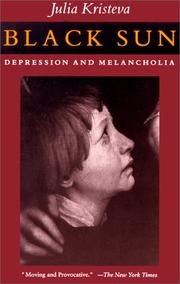
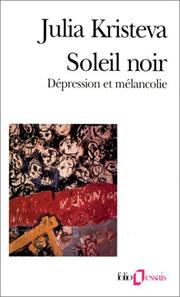
Black Sun
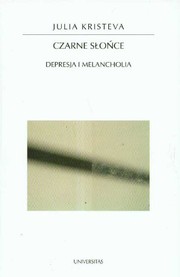
This study addresses melancholia, examining the phenomenon in the context of art, literature, philosophy and the history of religion and culture, as well as psychoanalysis. It describes the depressive as one who perceives the sense of self as a crucial pursuit which is almost unobtainable.
Tales of love
From the Publisher: Assuming the voices of psychoanalyst, scholar, and postmodern polemicist, Kristeva discusses both the conflicts and commonalities among the Greek, Christian, Roman, and contemporary discourses on love, desire, and self.

The portable Kristeva
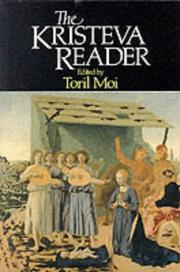
Linguist, psychoanalyst, and cultural theorist, Julia Kristeva is one of the most influential and prolific thinkers of our time. Acclaimed for her contributions over the past three decades in many areas of the humanities, her works have broken new ground in the study of the …


Possessions
This sequel to Julia Kristeva's celebrated allegory The Old Man and the Wolves returns to the corrupt seaside resort of a mythical town, where the boundaries between East and West, civilization and barbarism, and good and evil are erased. Part mystery, part meditation, this engrossing …
Hannah Arendt
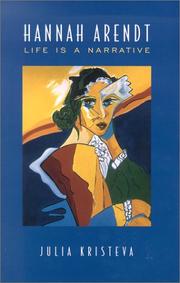
"In this volume, based on the series of Alexander Lectures she delivered at the University of Toronoto, Julia Kristeva explores the philosophical aspects of Hannah Arendt's work: her understanding of such concepts as language, self, body, political space, and life. Kristeva's aim is to clarify …

Langage, cet inconnu
The book is an introduction to linguistics which presents the reader with an incredible amount of information, ranging from Egyptian hieroglyphs to the communication of dolphins, from the anatomy of the vocal apparatus to the basic mechanisms of the unconscious in dreamwork. The bulk of …


The samurai
Julia Kristeva's dazzling fictional debut is an intellectual adventure, full of vitality, sensuousness, and sustained lyricism. Reminiscent of The Mandarins, Simone de Beauvoir's 1954 masterpiece, The Samurai brilliantly reconstructs a pivotal era of postwar French history - Paris in the late 1960s - and at …










Hatred and forgiveness
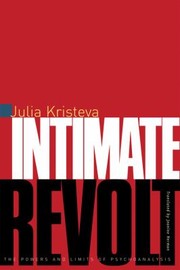
Julia Kristeva refracts the impulse to hate (and our attempts to subvert, sublimate, and otherwise process it) through psychoanalysis and text, exploring worlds, women, religion, portraits, and the act of writing. Her inquiry spans themes, topics, and figures central to her writing, and her paths …




Louise Bourgeois
New maladies of the soul
"These days, who still has a soul?" asks Julia Kristeva in her latest psychoanalytic exploration, New Maladies of the Soul. Drawing on her fifteen years of experience as a practicing psychoanalyst, Kristeva reveals to readers a new kind of patient, symptomatic of an age of …

Proust and the Sense of Time
Noted literary critic, psychoanalyst, and theorist Julia Kristeva presents a thoroughly original and compelling reading of Proust's Remembrance of Things Past, just delivered at the 1992 T.S. Eliot Memorial Lectures at Canterbury. Kristeva's first essay, "Proust and Time Embodied," takes a broadly psychoanalytical, linguistically sensitive …