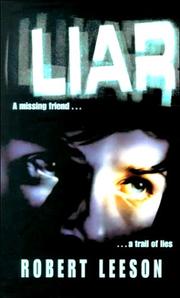
Robert Arthur Leeson was an English author, mainly known for his children's books. Before becoming a writer, he worked as Literary Editor of the left-wing British newspaper the Morning Star.
From Wikipedia · CC BY-SA 4.0
27 books in our catalogue.
1975
128 pages
Children'sFantasy
Alec's world changes when he meets Abu the genie! Disasters were leading two-nil on Alec's disaster-triumph scorecard when he slipped into the vacant factory lot, with Ginger Wallace hot on his heels, ready to destroy him. There was a catastrophe awaiting him at home too, …
Standalone books
1983
224 pages
Children's
Candy for the King, reminiscent of Voltaire's satire Candide, introduces Kitchener Candleford, an innocent who continues to believe absolutely in “love, liberty, loyalty and leadership” whatever his experiences to the contrary. Read more: http://www.answers.com/topic/robert-leeson#ixzz24FHPQ8JW
1989
215 pages
Children's
1996
192 pages
Children's
2001
88 pages
Children'sFantasy
1973
125 pages
Children's
1981
128 pages
Children's
1979
128 pages
Children's
1978
196 pages
Children's
A sequel to Robert Louis Stevenson's "Treasure Island" relating the events of a second voyage by the "Hispaniola" to Treasure Island in search of adventure, riches, and vengeance.
1976
94 pages
Children'sFantasy
1991
192 pages
General Fiction
1997
128 pages
Children'sHorror
1980
141 pages
Children's
1982
155 pages
Children's
1980
125 pages
Children's
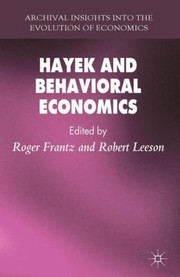
2012
349 pages
Business & Economics
Friedrich Hayek was awarded the 1974 Nobel Prize for Economic Sciences for his contributions to the analysis of money and the business cycle, and for his penetrating analysis of the interdependence of economic, social and institutional phenomena. Hayek was a polymath: he systematically analyzed human …
1982
144 pages
Children's
1999
160 pages
Children's
2003
160 pages
Children'sFantasy
1985
256 pages
Children'sHistory
A survey of British fiction for children with emphasis on its historical background and current development.
2000
187 pages
"This book examines the internal dynamics of the economics profession and explores the process by which two Chicago economists, Milton Friedman and George Stigler, influenced the direction of world history in the last quarter of the twentieth century. In macroeconomics, the quantity theory was economically …