Seyla Benhabib is a Turkish-born American philosopher. Benhabib is a senior research scholar and adjunct professor of law at Columbia Law School. She is also an affiliate faculty member in the Columbia University Department of Philosophy and a senior fellow at the Columbia Center for Contemporary Critical Thought. She was a scholar in residence at the Law School from 2018 to 2019 and was also the James S. Carpentier Visiting professor of law in spring 2019. She was the Eugene Mayer Professor of Political Science and Philosophy at Yale University from 2001 to 2020.
From Wikipedia · CC BY-SA 4.0
19 books in our catalogue.
1996
254 pages
Philosophy & ReligionPolitics & Society
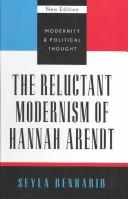
Interpreting the work of one of the most influential thinkers of the 20th century, The Reluctant Modernism of Hannah Arendt rereads Arendt's political philosophy in the light of newly gained insights into the historico-cultural background of her work. Arguing against the standard interpretation of Hannah …
2002
248 pages
HistoryPolitics & Society
2004
264 pages
Politics & Society
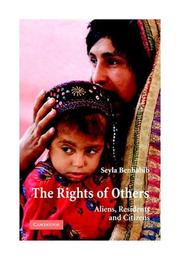
The Rights of Others examines the boundaries of political community by focusing on political membership - the principles and practices for incorporating aliens and strangers, immigrants and newcomers, refugees and asylum seekers into existing polities. Boundaries define some as members, others as aliens. But when …
2005
214 pages
Philosophy & Religion
1990
384 pages
Philosophy & Religion
1996
379 pages
Politics & Society
2011
312 pages
Politics & Society
The language of human rights has become the public vocabulary of our contemporary world. Ironically, as the political influence of human rights has grown, their philosophical justification has become ever more controversial. Building on a theory of discourse ethics and communicative rationality, this book addresses …
2018
304 pages
Politics & Society
Exile, Statelessness, and Migration explores the intertwined lives, careers, and writings of a group of prominent Jewish intellectuals during the mid-twentieth century{u2015}in particular, Theodor Adorno, Hannah Arendt, Walter Benjamin, Isaiah Berlin, Albert Hirschman, and Judith Shklar, as well as Hans Kelsen, Emmanuel Levinas, Gershom Scholem, …
1986
455 pages
Philosophy & Religion
1993
176 pages
Politics & Society
This unique volume presents a debate between four of the top feminist theorists in the United States today. Seyla Benhabib, Judith Butler, Drucilla Cornell and Nancy Fraser discuss some of the key questions facing feminist theory. Each articulates her own position in an initial essay, …
1992
266 pages
Philosophy & Religion
"'Situating the Self' is a decisive intervention into debates concerning modernity, postmodernity, ehtics, and the self. It will be of interest to all concerned with critical theory or contemporary ethics."--Provided by publisher.
2007
206 pages
Philosophy & ReligionPolitics & Society
In these two important lectures, distinguished political philosopher Seyla Benhabib argues that since the UN Declaration of Human Rights in 1948, we have entered a phase of global civil society which is governed by cosmopolitan norms of universal justice--norms which are difficult for some to …
2005
250 pages
Politics & Society
2007
Where do political identities come from, how do they change over time, and what is their impact on political life? This book explores these and related questions in a globalizing world where the nation state is being transformed, definitions of citizenship are evolving in unprecedented …
2004
250 pages
Politics & Society
The Rights of Others explores the tension between universal principles of human rights and the self-determination claims of sovereign states as they affect the claims of refugees, asylum seekers and immigrants. Few issues in world politics today are more important, or more troubling, but morally …