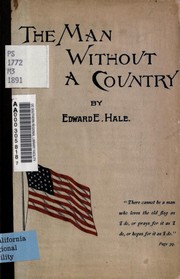
The Man Without a Country
1865
80 pages
Historical Fiction
The story of a U.S. Navy officer involved in the treason of Aaron Burr.
The story of a U.S. Navy officer involved in the treason of Aaron Burr.
Contains: The Legend of Sleepy Hollow - novelette by Washington Irving Federigo - short story by Prosper Mérimée (trans. of Federigo 1829) Dr. Heidegger's Experiment - Nathaniel Hawthorne The Overcoat - novelette by Николай Гоголь (trans. of Шинель) [as by Nikolai Gogol] A Christmas Carol …
Comment from Andrew Crumey: > The term "science fiction" hadn't been invented in 1870, when the American magazine Atlantic Monthly published the first part of Edward Everett Hale's delightfully eccentric novella The Brick Moon. Readers lacked a ready-made pigeonhole for it, confronted by a fantasy …
From the book:This book contains a life of Columbus, written with the hope of interesting all classes of readers. His life has often been written, and it has sometimes been well written. The great book of our countryman, Washington Irving, is a noble model of …
Rip Van Winkle, by W. Irving The legend of Sleepy Hollow, by W. Irving The great stone face, by N. Hawthorne Rappaccini's daughter, by N. Hawthorne The gold-bug, by E.A. Poe Descent into the Maelstrom, by E.A. Poe Fall of the House of Usher, by …
The tale: Rip Van Winkle, by W. Irving. Story of dramatic incident: The ambitious guest, by N. Hawthorne. Story of local color: Namgay Doola, by R. Kipling. Love story: Two of them, by J. Barrie. Story of romantic adventures: The Sir De Maletroit's door, by …