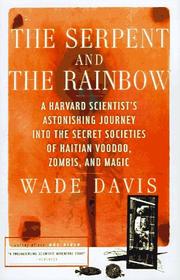
The Serpent and the Rainbow
1985
304 pages
HistoryTravel
A Harvard scientist's astonishing journey into the secret societies of Haitian voodoo, zombis, and magic.
A Harvard scientist's astonishing journey into the secret societies of Haitian voodoo, zombis, and magic.
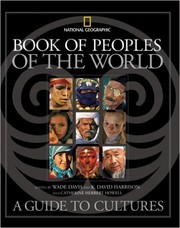
"Many of us are alarmed by the accelerating rates of extinction of plants and animals. But how many of us know that human cultures are going extinct at an even more shocking rate? While biologists estimate that 18 percent of mammals and 11 percent of …
"Enjoyable and insightful work was written as a tribute to the scientific achievements of Richard Evans Schultes, an Amazonia explorer active during 1940s-50s. Also relates explorations of the author and of Timothy Plowman, both Schultes' students. Intended for a popular audience"--Handbook of Latin American Studies, …
If the quest for Mount Everest began as a grand imperial gesture, as redemption for an empire of explorers that had lost the race to the Poles, it ended as a mission of regeneration for a country and a people bled white by war.
Set in locales ranging from the British Columbian wilderness to the jungles of the Amazon to the polar ice of the Arctic Circle, Shadows in the Sun is a testament to a world where spirits still stalk the land and seize the human heart. Though …
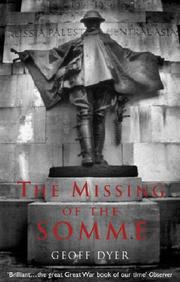
'Head bowed, rifle on his back, a soldier is silhouetted against the going down of the sun, looking at the grave of a dead comrade, remembering him. A photograph from the war, is also a photograph of the way the war will be remembered. It …
"Plugged by no fewer than twenty-five dams, the Colorado is the world's most regulated river, providing most of the water supply of Las Vegas, Tucson, and San Diego, and much of the power and water of Los Angeles and Phoenix, cities that are home to …
Richard Evans Schultes (1915-2001) was probably the greatest explorer of the Amazon, and regarded among anthropologists and seekers alike as the "father of ethnobotany." Taking what was meant to be a short leave from Harvard in 1941, he surveyed the Amazon basin almost continuously for …