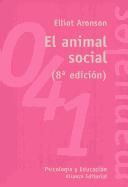
Elliot Aronson is an American psychologist who carried out experiments on the theory of cognitive dissonance, and invented the Jigsaw Classroom, a cooperative teaching technique that facilitates learning while reducing interethnic hostility and prejudice. In his widely-read 1972 social psychology book, The Social Animal, now in its twelfth edition, he laid out Aronson's First Law: "People who do crazy things are not necessarily crazy", thus asserting the importance of situational factors in disturbing behavior.
From Wikipedia · CC BY-SA 4.0
28 books in our catalogue.
1972
431 pages
Psychology & Self-Help
How are the beliefs and behaviors of people influenced by others? For more than twenty years, Elliot Aronson's The Social Animal has been captivating readers by looking at the answers to this multifaceted question. Presenting the story of modern social psychology as a vivid, engaging …
2007
304 pages
Psychology & Self-Help
At some point we all make a bad decision, do something that harms another person, or cling to an outdated belief. When we do, we strive to reduce the cognitive dissonance that results from feeling that we, who are smart, moral, and right, just did …
1973
472 pages
Psychology & Self-Help
When Elliot Aronson, Timothy Wilson, and Robin Akert started with the first edition of social Psychology their overriding goal was simple but ambitious: capture the excitement of social psychology in a textbook. Now in its sixth edition, the authors have discovered -nbsp;through many kind letters …
1991
304 pages
Psychology & Self-Help
2008
400 pages
Politics & SocietyPsychology & Self-HelpScience & Nature
2001
266 pages
Psychology & Self-Help
1973
457 pages
Psychology & Self-Help
1985
25 pages
Psychology & Self-Help
2012
576 pages
Psychology & Self-Help
2001
432 pages
Psychology & Self-Help
Americans create 57% of the world's advertising while representing only 6% of its population; half of our waking hours are spent immersed in the mass media. Persuasion has always been integral to the democratic process, but increasingly, thoughtful discussion is being replaced with simplistic soundbites …
2000
Psychology & Self-Help
2020
464 pages
Psychology & Self-Help
1920
616 pages
Psychology & Self-Help
2000
201 pages
Psychology & Self-HelpTrue Crime
1993
640 pages
Psychology & Self-Help
1968
819 pages
Psychology & Self-Help
2005
689 pages
Psychology & Self-Help
1990
250 pages
Psychology & Self-Help
2010
Psychology & Self-Help
2012
Psychology & Self-Help
1997
Psychology & Self-Help
2018
Psychology & Self-Help
2008
543 pages
Psychology & Self-Help
2019
Psychology & Self-Help