Jill Lepore is an American historian and journalist. She is the David Woods Kemper '41 Professor of American History at Harvard University and a staff writer at The New Yorker, where she has contributed since 2005. She writes about American history, law, literature, and politics.
From Wikipedia · CC BY-SA 4.0
15 books in our catalogue.
2018
922 pages
HistoryPolitics & Society
"In the most ambitious one-volume American history in decades, award-winning historian ... Jill Lepore offers a magisterial account of the origins and rise of a divided nation, an urgently needed reckoning with the beauty and tragedy of American history. Written in elegiac prose, Lepore's groundbreaking …
2014
448 pages
Comics & Graphic Novels
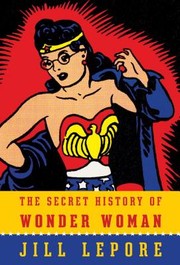
A cultural history of Wonder Woman traces the character's creation and enduring popularity, drawing on interviews and archival research to reveal the pivotal role of feminism in shaping her seven-decade story.
1998
337 pages
HistoryPolitics & Society
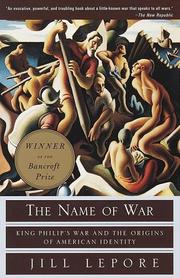
Winner of the the 1998 Ralph Waldo Emerson Award of the Phi Beta Kappa Society King Philip's War, the excruciating racial war--colonists against Indians--that erupted in New England in 1675, was, in proportion to population, the bloodiest in American history. Some even argued that the …
2020
432 pages
Politics & Society
The Simulmatics Corporation, founded in 1959, mined data, targeted voters, accelerated news, manipulated consumers, destabilized politics, and disordered knowledge--decades before Facebook, Google, Amazon, and Cambridge Analytica. Silicon Valley likes to imagine it has no past but the scientists of Simulmatics are the long-dead grandfathers of …
2013
464 pages
Biography & MemoirPolitics & Society
A revelatory portrait of Benjamin Franklin's youngest sister and a wholly different account of the founding of the United States.
2019
160 pages
HistoryPhilosophy & ReligionPolitics & Society
1999
175 pages
Children'sHistory
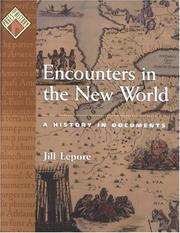
A collection of documents illustrating encounters between Native American peoples and a variety of European newcomers from the fifteenth to the eighteenth centuries. Includes maps, journals, advertisements, and letters.
2005
323 pages
HistoryPolitics & Society
2010
207 pages
HistoryPhilosophy & ReligionPolitics & Society
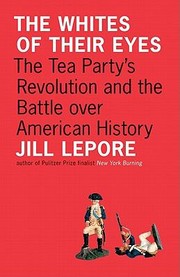
Asserts that the Tea Party movement prefers to rewrite the history of the American Revolution as anti-intellectual and antipluralist.
2012
282 pages
Politics & Society
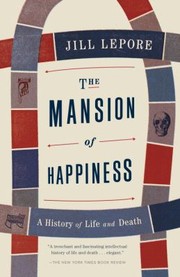
A history of American ideas about life and death from before the cradle to beyond the grave.
2016
235 pages
Biography & Memoir
"A "New Yorker" staff writer and Harvard historian chronicles the discovery of Joe Gould's long-lost manuscript, "The Oral History of Our Time," and of the violence, betrayals, and madness that led to its concealment,"--NoveList. From New Yorker staff writer and Harvard historian Jill Lepore, the …
2012
430 pages
HistoryPolitics & Society
In this book, the author investigates American origin stories, from John Smith's account of the founding of Jamestown in 1607 to Barack Obama's 2009 inaugural address, in order to show how American democracy is bound up with the history of print. It excavates the origins …
2002
256 pages
HistoryPolitics & Society