Patricia Hill Collins
1948–
Patricia Hill Collins is an American academic specializing in race, class, and gender. She is a distinguished university professor of sociology emerita at the University of Maryland, College Park. She is also the former head of the Department of African-American Studies at the University of Cincinnati. Collins was elected president of the American Sociological Association (ASA), and served in 2009 as the 100th president of the association – the first African-American woman to hold this position.
From Wikipedia · CC BY-SA 4.0
10 books in our catalogue.
1990
286 pages
Politics & Society
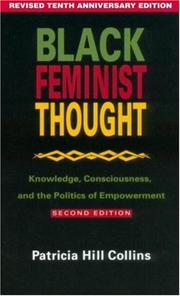
In spite of the double burden of racial and gender discrimination, African-American women have developed a rich intellectual tradition that is not widely known. In Black Feminist Thought, originally published in 1990, Patricia Hill Collins set out to explore the words and ideas of Black …
1992
562 pages
Politics & Society
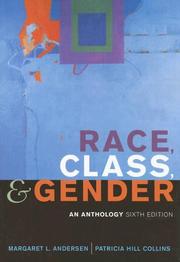
Examines the interrelationship of race, class, and gender and explores how they have shaped the experiences of all people in the U.S. Drawing from an array of contemporary and historical readings, coupled with personal narratives from a diverse group of writers, this book helps students …
2016
224 pages
Politics & Society
The concept of intersectionality has become a central topic in academic and activist circles alike. But what exactly does it mean, and why has it emerged as such a vital lens through which to explore how social inequalities of race, class, gender, sexuality, age, ability, …
2004
379 pages
Politics & SocietyPsychology & Self-Help
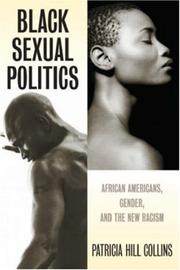
Black Sexual Politics: African Americans, Gender and the New Racism by Patricia Hill Collins is a work of critical theory that discusses the way that race, class and gender intersect to affect the lives of African American men and women in many different ways, but …
1998
312 pages
Politics & Society
2019
376 pages
Politics & Society
2009
244 pages
Politics & Society
Sociologist Patricia Hill Collins opens this brilliant new book on race and education by describing how in her senior year at the Philadelphia High School for girls, near the end of a public school education that “had almost silenced me,” she was invited to deliver …
1969
192 pages
Politics & Society
"Though the end of the Civil War brought legal emancipation to Blacks, their social oppression continued long afterward. The most virulent form of this ongoing persecution was the practice of lynching. During the 1880s and 1890s, more than one hundred African Americans per year were …
2010
542 pages
Politics & Society
2006
248 pages
Politics & Society