
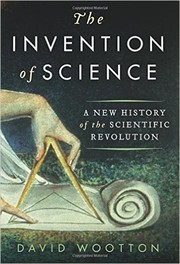
The invention of science
"The Invention of Science goes back five hundred years in time to chronicle this crucial transformation, exploring the factors that led to its birth and the people who made it happen. Wootton argues that the Scientific Revolution was actually five separate yet concurrent events that …
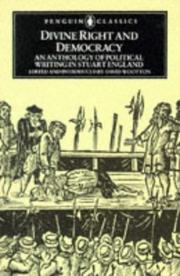
Divine right and democracy : an anthology of political writing in Stuart England
"A Penguin original"--Cover. Includes bibliographies and index.
Republicanism, liberty, and commercial society, 1649-1776
This book examines republicanism in an Anglo-American and European context from the execution of Charles I to the publication of Tom Paine's Common Sense. It gives weight not only to the thought of the theorists of republicanism but also to the practical experience of republican …
Galileo
Galileo (1564-1642) is one of the most important and controversial figures in the history of science. Tackling Galileo as astronomer, engineer, and author, this book places him at the centre of Renaissance culture. It draws extensively on Galileo's voluminous letters, many of which were self-censored …
Invention of Science
From the Introduction... There were systems of knowledge we call ‘sciences' before 1572, but the only one which functioned remotely like a modern science, in that it had sophisticated theories based on a substantial body of evidence and could make reliable predictions, was astronomy, and …