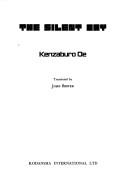
The Silent Cry
2011
288 pages
General Fiction
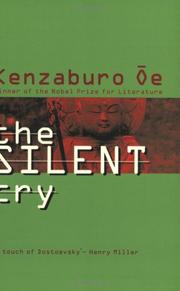
The Silent Cry is a novel by Japanese author Kenzaburō Ōe, first published in Japanese in 1967 and awarded the Tanizaki Prize that year.
The Silent Cry is a novel by Japanese author Kenzaburō Ōe, first published in Japanese in 1967 and awarded the Tanizaki Prize that year.
Kenzaburō Ōe, the winner of the 1994 Nobel Prize for Literature, is internationally acclaimed as one of the most important and influential post-World War 2 Writers, known for his powerful accounts of the atomic bombing of Hiroshima and his own struggle to come to terms …
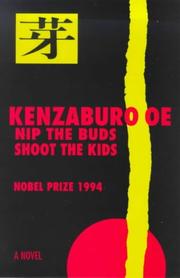
The first novel by Japan's most celebrated living writer, Nip The Buds, Shoot the Kids recounts the exploits of fifteen teenage reformatory boys evacuated to a remote mountain village in wartime. The narrator who acts as nominal leader of the small band, his younger brother …
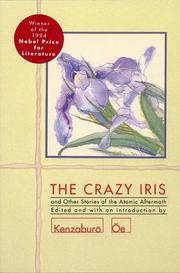
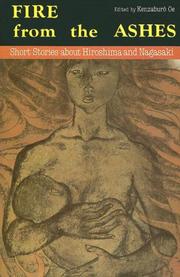
An anthology of stories about Japan after the atom bomb is edited by an acclaimed writer and surveys Japan's best storytellers on the bomb's impact on the daily lives of peasants, artists, and children.
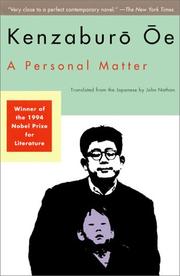
"Bird, the protagonist of a Personal Matter, is a frustrated young intellectual in a failing marriage whose utopian dream is shattered when his wife gives birth to a brain-damaged child. More than once when confronted with a problem, he has "cast himself adrift on a …
"[Kogito Choko] returns to his hometown village in search of a red suitcase rumored to hold documents revealing the details of his father's death during World War II, details that will serve as the foundation for his new, and final, novel. Since his youth, renowned …
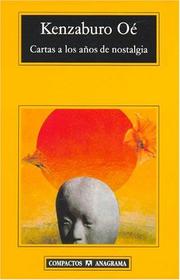
Revelación literaria en los años cincuenta, Kenzaburo Oé quedó consagrado como el mejor novelista japonés de la generación posterior a Yukio Mishima desde los años sesenta y se ha afirmado que recuerda a Dante, William Blake y Malcom Lowry. "Una cuestión personal", una de sus …
In December 1994, on the acceptance of only the second Nobel Prize awarded to a Japanese writer, Kenzaburo Oe gave a speech that was a message for mankind: one that pledged his own faith in tolerance and human decency; in the renunciation of war; and …
Late in his life, writer Kogito Choko reconnects with his estranged friend, the filmmaker Goro Hanawa. Goro's subsequent suicide causes Kogito to examine and reexamine Goro's life for clues that will lead him to understand his friend's path.
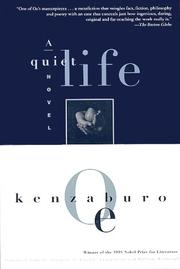
A Quiet Life is narrated by Ma-Chan, a young woman who at the age of twenty finds herself in an unusual family situation. Her father is a famous and fascinating novelist; her older brother, though mentally handicapped, possesses an almost magical gift for musical composition. …
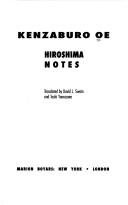
Hiroshima Notes is a moving statement from Japan's most celebrated living writer on the meaning of the Hiroshima bombing and its terrible legacy. Kenzaburo Oe's account of the lives of the many victims of Hiroshima - the young, the old, women and children - and …
Oe explores the private and public ramifications of life with Mori, his retarded son. It is a free-wheeling meditation on justice, responsibility, and the possibility of human relationships.
Un avion de guerre américain s'écrase dans les montagnes japonaises, près d'un village. Le seul rescapé, un homme noir, est fait prisonnier dans une cave et traité comme une bête.
Autobiografisch getint relaas waarin een jongeman geconfronteerd wordt met de geboorte van zijn mismaakte kind.
"A decade before Somersault opens, two men referred to as the Patron and Guide of mankind were leaders of an influential religious movement. When a radical faction of their followers threatened to unleash an apocalypse, they recanted all of their teachings and abandoned their followers. …
Two views of a world whose traditional values have been blown away: Seventeen, the story of a lonely boy who turns to a right-wing group for self-esteem, and J, the story of a spoiled young drifter son of a Japanese executive.