American Science series. Briefer course


Psychology
"(From the 1892 preface) In preparing the following abridgment of my larger work, the Principles of Psychology, my chief aim has been to make it more directly available for class-room use. For this purpose I have omitted several whole chapters and rewritten others. I have …
Standalone books
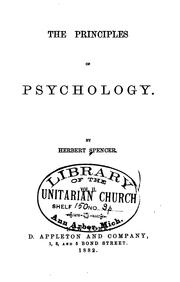
The principles of psychology
The Principles of Psychology is a monumental text in the history of psychology, written by William James and published in 1890. There were four methods in James' psychology: analysis (i.e. the logical criticism of precursor and contemporary views of the mind), introspection (i.e. the psychologist's …
The Varieties of Religious Experience
This is one of the most remarkable books ever written about religious experience. James captures the reader’s attention with vivid instances of religious experience collected from diverse sources, including classical religious texts, newspaper articles, and clinical studies. In this collection of Gifford lectures given in …
Pragmatism
"The lectures that follow were delivered at the Lowell Institute in Boston in November and December 1906, and in January 1907 at Columbia University in New York"--Pref."First edition, June 1907. Reprinted July (twice), October 1907"--Verso of t.p.Includes index. The present dilemma in philosophy -- What …
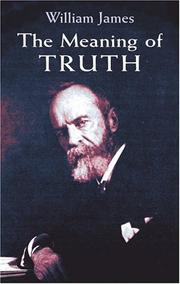
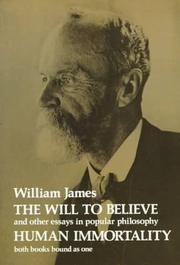
The will to believe
This volume contains the complete texts of two books by America's most important psychologust and philospher. Easy to understand, yet, brilliant and penetrating, the books were written specifically for laymen and they are still stimulating reading for readers concerned with important questions of belief in …

Pragmatism and Other Writings
"James's essays seek to bring his readers into the processes and play of his own reflections. Ranging across the intellectual terrain from philosophy and psychology to religion and politics, James composed the most engaging and enduring articulation of that distinctly American contribution to world thought, …



Pluralistic Universe
Lectures on the advantages of using radical empiricism (pluralism) when trying to relate entities in the absolute to the absolute.

Essays in pragmatism
"Selected bibliography": p. xvi. The sentiment of rationality.--The dilemma of determinism.--The moral philosopher and the moral life.--The will to believe.--Conclusions on varieties of religious experience.--What pragmatism means.--Pragmatism's conception of truth.



Collected essays and reviews


The letters of William James
“The whole man, with his wide interests in philosophy, medicine, painting, and writing, as well as the home and Harvard life, is admirably disclosed in his letters, pencil sketches and in the biographical sketch by his son.” — A.L.A. Catalog 1926


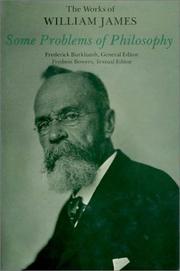
Some problems of philosophy
"With the clarity that William James deemed obligatory, Some Problems of Philosophy outlines his theory of perception. The early chapters expose the defects of intellectualism and monism and the advantages of empiricism and pluralism. The novelty that enters into concrete perceptual experience, and that is …


Writings, 1878-1899
Selection of writings by philosopher, psychologist, and champion of religious pluralism William James, including "The Will to Believe and Other Essays in Popular Philosophy," "Psychology: Briefer Course," and ten other essays.



Talks to teachers on psychology and to students on some of life's ideals

The Emotions
The publication, in 1872, of Darwin's The Expression of the Emotions in Man and Animals had a profound effect upon the development of Psychology. Darwin's book gave to three men the impetus to develop the theory of the emotions as organic processes, and this theory …


James and Dewey on belief and experience
"Donald Capps and John Capps's James and Dewey on Belief and Experience juxtaposes the key writings of two philosophical superstars. As fathers of Pragmatism, America's unique contribution to world philosophy, their work has been enormously influential, and remains essential to any understanding of American intellectual …


William and Henry James
This collection of 216 letters offers an accessible, single-volume distillation of the exchange between celebrated brothers William and Henry James. Spanning more than fifty years, their correspondence presents a lively account of the persons, places, and events that affected the Euro-American world from 1861 until …


Zero point
When Professors James Flanagan and Thomas Nellings from Brooklyn College of Natural History embark on a trip to Kentucky to inspect recently discovered artifacts in Mammoth Cave, they expect to find typical North American remains. But from the moment they inspect the artifacts, they know …