
Social justice and the city
Social Justice and the City is a book published in 1973 written by the Marxist geographer David Harvey. The book is an attempt to lay out afresh the paradigm of urban geography, by bringing together the two conflicting theses of methodology and philosophy. Going against …
The new imperialism
People around the world are confused and concerned. Is it a sign of strength or of weakness that the US has suddenly shifted from a politics of consensus to one of coercion on the world stage? What was really at stake in the war on …

A Companion to Marx's Capital
In recent years, we have witnessed a surge of interest in Marx’s work in the effort to understand the origins of our current predicament. For nearly forty years, David Harvey has written and lectured on Capital, becoming one of the world’s most foremost Marx scholars. …

Seventeen contradictions and the end of capitalism
"What I am seeking here is a better understanding of the contradictions of capital, not of capitalism. I want to know how the economic engine of capitalism works the way it does, and why it might stutter and stall and sometimes appear to be on …
The condition of postmodernity
Traces the development of the concept of postmodernism, explains its differences with modernism, and discusses political and social influences.

The limits to capital
The Limits to Capital provides one of the best theoretical guides to the history and geography of capitalist development. In this new edition, Harvey updates his classic text with a substantial discussion of the turmoil in world markets today.

Rebel cities
Mucho antes de que se creara el movimiento 15-M u Occupy Wall Street, las ciudades del mundo moderno se habían convertido en focos de la política revolucionaria, en los que emergían a la superficie las corrientes más profundas del cambio social y político. Las ciudades …



Justice, nature, and the geography of difference
This book engages with the politics of social and environmental justice, and seek new ways to think about the future of urbanization in the twenty-first century. It establishes foundational concepts for understanding how space, time, place and nature - the material frames of daily life …

Marx, capital and the madness of economic reason
Marx's Capital is one of the most important texts of the modern era. The three volumes, published between 1867 and 1883, changed the destiny of countries, politics and people across the world - and continue to resonate today. In this book, David Harvey lays out …

The enigma of capital
"Since the moment the deeply unsettling financial disaster erupted in September 2008, a crisis of confidence has gripped the economic mind. Experts of all stripes, from Alan Greenspan on down, were at a loss to explain what had happened. David Harvey saw this moment coming. …
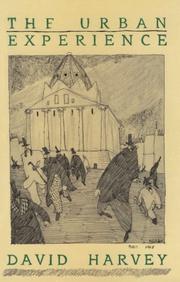
The urban experience
This book makes available to undergraduates the author's recent writing (including a new essay on flexible accumulation and the city of spectacle) on the physical and social environment of western cities, in which he explores the links between the processes and pressures of urbanization, the …

Paris, capital of modernity
"Paris has long been one of the most influential cities in the world, but it was during the days of the "Second Empire" that the city became the template for modernity as we have come to know it. In the period between the failed revolutions …


The urbanization of capital
The Urbanization of Capital (Harvey, 1985b), a collection of six papers published during the previous decade together with two new chapters, does exactly what it says on the cover: It explores the question of how capital -- which Harvey, following Marx, theorizes as a process …

Cosmopolitanism and the geographies of freedom
"Liberty and freedom are frequently invoked to justify political action. Presidents as diverse as Woodrow Wilson, Franklin Delano Roosevelt, John F. Kennedy, Ronald Reagan, and George W. Bush have built their policies on some version of these noble values. Yet in practice, idealist agendas often …


Justicia, naturaleza y geografía de la diferencia
Este libro está escrito a partir de un hondo compromiso con la política de la justicia social y medioambiental y para ello explora nuevas maneras de reflexionar sobre el futuro de la urbanización en el siglo XXI, las formas de producción de la naturaleza en …


