A for Andromeda
1962
198 pages
Science Fiction
A computer relays messages to scientists which threaten the security of human life.
A computer relays messages to scientists which threaten the security of human life.
First series, 1972-73, Technology and the frontiers of knowledge Saul Bellow: Literature in the age of technology. Daniel Bell: Technology, nature, and society. Edmundo O'Gorman: History, technology, and the pursuit of happiness. Sir Peter Medawar: Technology and evolution. Arthur C. Clarke: Technology and the limits …
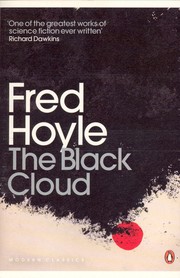
The novel's plot revolves around the consequences of the Earth's sun being blocked out by an "intelligent" black cloud.
White Creatures - short story by Gregory Benford The Singing Diamond - short story by Robert L. Forward Publish and Perish - short story by Paul J. Nahin Skystalk - novelette by Charles Sheffield The Universal Library - short story by Kurd Lasswitz (trans. of …
Professor Hoyle's sf adventure is a modern relative of Wells' The Time Machine. A transmission of solar beams plays havoc with time. England is in the 1960s but WWI is still raging in western Europe. Greece is in the golden age of Pericles, America some …
The Nature of the Universe, containing an early use of the "big bang" expression, is derived from a series of radio broadcast lectures on astronomy for the BBC.
Author's theory of the cause of ice ages. Describes how the next ice age will come and how we can prevent it.
"The British spaceship DSP 15 returns from the stars of the Ursa Major stream, thirty years late, crewless and carrying its captain's last message: ""If this ship returns to Earth, then mankind is in deadly peril,"" specifically an alien invasion, as Dr. Warboys discovers with …
Two of the pioneers of the modern version of panspermia - the theory that comets disperse microbial life throughout the cosmos - trace the development of their ideas through a sequence of key papers. A logical progression of thought is shown to lead up to …
Studies the scientific principles of the universe as well as the instruments used to observe it in a text that emphasizes the relationship of astronomy to physics.
Examines the origins of life on earth, analyzes the Darwinian theory of evolution, and argues that life is the result of a deliberate plan.