The University of Chicago. Contributions to education

Standalone books
Experience and education
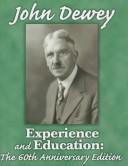
Experience and Education is the best concise statement on education ever published by John Dewey, the man acknowledged to be the pre-eminent educational theorist of the twentieth century. Written more than two decades after Democracy and Education (Dewey's most comprehensive statement of his position in …

Democracy and Education
Publisher description: John Dewey (1859-1952) believed that learning was active and schooling unnecessarily long and restrictive. His idea was that children came to school to do things and live in a community which gave them real, guided experiences which fostered their capacity to contribute to …
Art as Experience
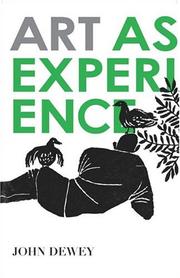
Based on John Dewey’s lectures on esthetics, delivered as the first William James Lecturer at Harvard in 1932, Art as Experience has grown to be considered internationally as the most distinguished work ever written by an American on the formal structure and characteristic effects of …

Human Nature and Conduct An Introduction to Social Psychology
nfluential work by the great educator/philosopher maintains that the key to social psychology lies in an understanding of the many varieties of habit; individual mental activity is guided by subordinate factors of impulse and intelligence. His investigation focuses on three main areas of conduct: habit, …
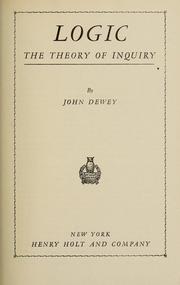
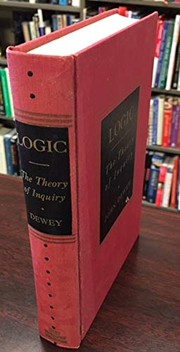
Logic, the theory of inquiry
"This book is a development of ideas regarding the nature of logical theory that were first presented ... in Studies in logical theory; that were somewhat expanded in Essays in experimental logic and were briefly summarized with special reference to education in How we think."--Preface.

The public and its problems
"An annotated edition of John Dewey's work of democratic theory, first published in 1927. Includes a substantive introduction and bibliographical essay"--Provided by publisher.
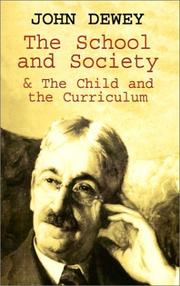
The school and society
Abandon the notion of subject-matter as something fixed and ready-made in itself, outside the child's experience; cease thinking of the child's experience as also something hard and fast; see it as something fluent, embryonic, vital; and we realize that the child and the curriculum are …
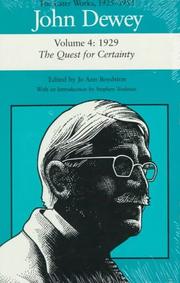
John Dewey: The Later Works, 1925-1953
John Dewey's Experience and Nature has been considered the fullest expression of his mature philosophy since its eagerly awaited publication in 1925. Irwin Edman wrote at that time that "with monumental care, detail and completeness, Professor Dewey has in this volume revealed the metaphysical heart …

The quest for certainty
These eleven lectures were originally presented by John Dewey at the University of Edinburgh in 1929, when he was seventy years old. They represent his most mature thinking on the theory of knowledge and how it relates to human behavior.

Experience and nature
The book covers Dewey's basic formulation of the problems of knowledge, with both a full discussion of theories and resolutions propounded by other systems, and a detailing of Dewey's own concepts upon the relationship of the external world, the mind, and knowledge.

The Meaning of Marx


Liberalism and social action
"In Liberalism and Social Action, John Dewey (1859-1952), one of America's leading social philosophers, surveys the history of liberal thought from John Locke to John Stuart Mill, in his search to find the core of liberalism for today's world. While liberals of all stripes have …


Intelligence in the modern world
Selections from writings of John Dewey, with a 241 p. introduction by the editor.


Philosophy, psychology and social practice

The early works, 1882-1898

The influence of Darwin on philosophy, and other essays in contemporary thought

The Middle Works of John Dewey, Volume 4, 1899 - 1924



Knowing and the known
Knowing and the Known is a 1949 book by John Dewey and Arthur Bentley.

The Later Works of John Dewey, Volume 13, 1925 - 1953


The Middle Works of John Dewey, Volume 10, 1899 - 1924

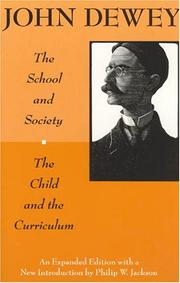
The School and Society and The Child and the Curriculum
The School and Society and The Child and the Curriculum succinctly set forth John Dewey's revolutionary philosophy of education as an experimental, child-centered process. For years, educators have turned to this classic volume for insight and practical guidance. Yet Dewey's renown and his enduring readership …

The school and society & the child and the curriculum
Unmodern philosophy and modern philosophy
"In 1947 America's premier philosopher, educator, and public intellectual John Dewey purportedly lost his last manuscript on modern philosophy in the back of a taxicab. Now, sixty-five years later, Dewey's fresh and unpretentious take on the history and theory of knowledge is finally available. Editor …


Day of the Angel
"Day of the Angel' follows the fates and fortunes of three generations of the Ushakov family, members of the Russian émigré community living in Paris following the Revolution. Against the historical background of totalitarian terror, famine and war, depicted in harrowing detail as an epic …


interest and effort in education [ riverside educational monographs]


Kunst als Erfahrung
Art as Experience (1934) is John Dewey's major writing on aesthetics, originally delivered as the first William James Lecture at Harvard (1932). Dewey's aesthetics have been found useful in a number of disciplines, including new media.


Lectures in the philosophy of education, 1899


The Early Works of John Dewey, Volume 3, 1882 - 1898


The essential Dewey
In addition to being one of the greatest technical philosophers of the 20th century, John Dewey was one of America's last great public intellectuals. Based on the award-wining 37-volume critical edition of Dewey's work, THE ESSENTIAL DEWEY presents in two volumes a collection that represents …


