The Best American Poetry 1990
1990
320 pages
Poetry & Drama
The Best American Poetry 1990, a volume in The Best American Poetry series, was edited by David Lehman and by guest editor Jorie Graham. —Wikipedia
The Best American Poetry 1990, a volume in The Best American Poetry series, was edited by David Lehman and by guest editor Jorie Graham. —Wikipedia
For this major collection, spanning twenty years of writing, Jorie Graham has made a generous selection from her five previous volumes of poetry: Hybrids of Plants and of Ghosts, Erosion, The End of Beauty, Region of Unlikeness, and Materialism.
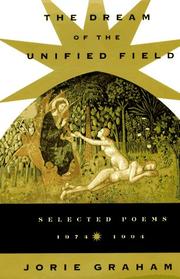
A collection of verse by the Pulitzer Prize-winning author of "The dream of the unified Field" includes meditations on nature, spirit, and imagination.
What does it mean to be fully present in a human life? How—in the face of the carnage of war, the no longer merely threatened destruction of the natural world, the faceless threat of spiritual oversimplification and reactive fear—does one retain one's capacity to be …
In her first entirely new collection of poems since Materialism (1993). Pulitzer Prize winner Jorie Graham returns with great clarity and passion to her lyrical roots - and builds a rich musical meditation of desire. In these poems, Graham approaches a host of characters, each …
In her fifth collection the poet undertakes a meditation on the nature of our restless relationship with matter.
In her formidable and clairvoyant new collection, Runaway, Jorie Graham deepens her vision of our futurity. What of us will survive? Identity may be precarious, but perhaps love is not? Keeping pace with the desperate runaway of climate change, social disruption, our new mass migrations, …
The New York Times has said that "Jorie Graham's poetry is among the most sensuously embodied and imaginative writing we have," and this new collection is a reminder of how startling, original, and deeply relevant her poetry is. In Sea Change, Graham brings us to …