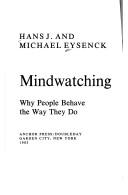
The psychology of politics
- Pages
- 317
- 7 editions
- First published
- 1954
- 1 language
Join or log in to shelve and rate Free, no password.
Overview
In writing The Psychology of Politics, Hans Eysenck had two aims in mind: to write a book about modern developments in the field of attitude studies which would be intelligible to the layman; and one that would integrate into one consistent theoretical system a large number of contributions on the topic from different fields.
The research presented in this book outlines the main principles of organization and structure in the field of attitudes. These principles account in a remarkably complete and detailed manner for the systems of political organization found in Great Britain, that is, the Conservative, Liberal, and Socialist parties, and the communist and fascist groups.
Next, Eysenck relates these principles to the system of personality structure which for many years formed the main focus of research activity at the Institute of Psychiatry in London. The Psychology of Politics contains the evidence and arguments Eysenck used to demonstrate his approach. This volume is of enduring significance for psychologists, political theorists, and historians.
Ratings & reviews
Log in to rate or review this book.
No written reviews yet.
Discussions
Talk about this book with other readers.
Log in to start a discussion.
No discussions yet.
Editions


Details & links
- First published
- 1954
- Pages
- 317
- Languages
- Available in 1 language
Where to buy this book: see “Buy this book”
More about this book
Read a sample, borrow it or see other editions → openlibrary.org