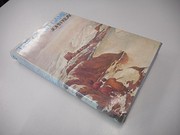
Empire's end
- Pages
- 385
- 1 edition
- First published
- 1997
- 1 language
Join or log in to shelve and rate Free, no password.
Overview
To the haunting notes of a lone bugle playing "The Last Post," the sole remaining Western flag is lowered. With Hong Kong's return to China on June 30, 1997, an era of empire ends, exactly five hundred years after Vasco de Gama first sailed to the Asian mainland. As recently as 1930, half of the world's population was somewhere subject to American, British, French or Dutch colonial rule; two generations later, the West's empires in the East are extinct.
In the process, the Orient, once a byword for things sleepy, mysterious and decadent, has become a catchphrase for all things modern and dynamic. What happened? What are the legacies left by five hundred years of colonial presence? For legacies there are - deep ones - and ignoring them is perilous for anyone who hopes to understand modern-day Asia.
European or American troops are no longer stationed in the Pacific by right. Culturally and economically, though, the East and the West have never been more closely tied. No book has ever explored the relationship between the two so fully as John Keay's Empire's End, a magnificent work of history that takes the first full measure of a powerful evolutionary process that has pulled the world from the Age of Empire into the Asian Century.
Ratings & reviews
Log in to rate or review this book.
No written reviews yet.
Discussions
Talk about this book with other readers.
Log in to start a discussion.
No discussions yet.
Editions

Details & links
- First published
- 1997
- Pages
- 385
- Languages
- Available in 1 language
Where to buy this book: see “Buy this book”
More about this book
Read a sample, borrow it or see other editions → openlibrary.org