The Cold War
- Pages
- 478
- 6 editions
- First published
- 2005
- 1 language
Join or log in to shelve and rate Free, no password.
Overview
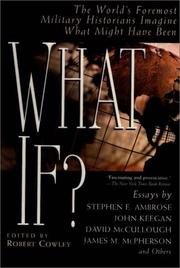
Even fifteen years after the end of the Cold War, it is still hard to grasp that we no longer live under its immense specter. For nearly half a century, from the end of World War II to the early 1990s, all world events hung in the balance of a simmering dispute between two of the greatest military powers in history. Hundreds of millions of people held their collective breath as the United States and the Soviet Union, two national ideological entities, waged proxy wars to determine spheres of influence--and millions of others perished in places like Korea, Vietnam, and Angola, where this cold war flared hot. Such a consideration of the Cold War--as a military event with sociopolitical and economic overtones--is the crux of this stellar collection of twenty-six essays compiled and edited by Robert Cowley, the longtime editor of MHQ: The Quarterly Journal of Military History. Befitting such a complex and far-ranging period, the volume's contributing writers cover myriad angles. John Prados, in "The War Scare of 1983," shows just how close we were to escalating a war of words into a nuclear holocaust. Victor Davis Hanson offers "The Right Man," his pungent reassessment of the bellicose air-power zealot Curtis LeMay as a man whose words were judged more critically than his actions. The secret war also gets its due in George Feiffer's "The Berlin Tunnel," which details the charismatic C.I.A. operative "Big Bill" Harvey's effort to tunnel under East Berlin and tap Soviet phone lines--and the Soviets' equally audacious reaction to the plan; while "The Truth About Overflights," by R. Cargill Hall, sheds light on some of the Cold War's best-kept secrets. The often overlooked human cost of fighting the Cold War finds a clear voice in "MIA" by Marilyn Elkins, the widow of a Navy airman, who details the struggle to learn the truth about her husband, Lt. Frank C. Elkins, whose A-4 Skyhawk disappeared over Vietnam in 1966. In addition there are profiles of the war's "front lines"--Dien Bien Phu, the Cuban Missile Crisis, the Bay of Pigs--as well as of prominent military and civil leaders from both sides, including Harry S. Truman, Nikita Khrushchev, Dean Acheson, Gen. Douglas MacArthur, Richard M. Nixon, Gen. Vo Nguyen Giap, and others.Encompassing so many perspectives and events, The Cold War succeeds at an impossible task: illuminating and explaining the history of an undeclared shadow war that threatened the very existence of humankind.From the Hardcover edition.
Ratings & reviews
Log in to rate or review this book.
No written reviews yet.
Discussions
Talk about this book with other readers.
Log in to start a discussion.
No discussions yet.
Editions
-
Format not known Random House Trade Paperbacks 2006 478 pages English ISBN 9780812967166 Open Library


Details & links
- First published
- 2005
- Pages
- 478
- Languages
- Available in 1 language
Where to buy this book: see “Buy this book”
More about this book
Read a sample, borrow it or see other editions → openlibrary.org