Films and feelings
- Pages
- 288
- 7 editions
- First published
- 1967
- 1 language
Join or log in to shelve and rate Free, no password.
Overview
Introduction
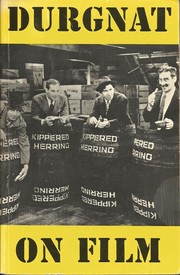
Beyond what interest it may possess as a collection of different cinematic topics, this text is offered also as a basis for re-exploring an art-form which seems to pose certain aesthetic problems more insistently than other media have done.
Apart from the aesthetic questions, approached in the opening chapters on cinema style, a second source of confusion lies in the sharpness with which, for various historical and economic reasons, the medium generates conflicts between its function as an 'art form' and its function as an entertainment 'dream factory'.
These conflicts in turn have helped to confuse other problems with which the sincere screen artist is faced. Film criticism tends to assume a sophisticated spectator. But in James Agate's words, "The film critic wants a picture to be so good that it will stand up to educated taste, whereas the aim of the film producer is to produce something which cannot be defeated by lack of taste.' To what extent does criticism habitually dismiss as 'bad' art films which are 'coarsegrained'—but authentic and rewarding— art—and so falsify its view of the medium ?
Raymond Durgnat
"The basic approach in this endeavor at defining an esthetic of the movies is a conscientious and knowledgeable examination of a great many films of the most diverse origins and style. By drawing analogies to other arts, particularly to music, the author probes the conflict between the medium's function as an art form, and as a purveyor of entertainment. He finds that movies at all levels, are expressions of complex emotional and economic stimuli which 'may communicate before they are understood.' The brisk narrative style of these critical insights makes for compelling and enjoyable reading." — Film News
Raymond Durgnat re-examines literally hundreds of films— from Birth of a Nation to those from the 1960's, from Hollywood smash hits to avant garde obscurities, from all parts of the world — in an effort to isolate universals of the language of films and to lift their poetics to an articulate level.
In addition to these cross-references among a large number of films, a few are selected for extended analysis. These "full-length features.-" include Cocteau's Orphée, Hitchcock's Psycho. Chabrol's Les Cousins, Ray's Johnny Guitar, Newman's This Island Earth. His succinct synopsis of the running plot functions as an analysis of it; thus, much of the critical insight is in the form of entertaining narrative.
The book is divided into four sections. The first is concerned with the union of film style and film content. The second treats the connection between the film as an entertainment and as a picture of reality, suggesting that even films that are unabashedly "escapist" are really rooted in, and comment on, the inescapable facts of social life. The third section attempts to close the gap between the popular responses and those of "high culture." This is not a surrender to the mob and to the moguls." The author's standards are more stringent than those of the persuasive camp" followers and "pop" critics. The final section produces further evidence of the existence of cinematic poetry in the commercial movie.
Ratings & reviews
Log in to rate or review this book.
No written reviews yet.
Discussions
Talk about this book with other readers.
Log in to start a discussion.
No discussions yet.
Editions


Details & links
- First published
- 1967
- Pages
- 288
- Languages
- Available in 1 language
Where to buy this book: see “Buy this book”
More about this book
Read a sample, borrow it or see other editions → openlibrary.org