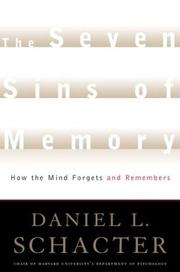
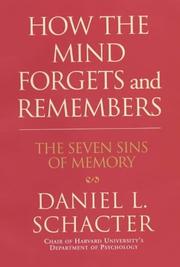
Searching for memory
- Pages
- 398
- 3 editions
- First published
- 1996
- 1 language
Join or log in to shelve and rate Free, no password.
Overview
Drawing on his own work and that of other cognitive, clinical, and neuroscientists, Schacter gives us overwhelming evidence for the thesis that we possess more than one memory system, which explains why some brain-damaged people cannot remember past events, and others cannot acquire new knowledge or call up old. He also shows us how new breakthroughs in brain imaging are allowing us to see, for the first time, the many parts of the brain that must interact to enable us to encode or retrieve a memory.
Searching for Memory contains fascinating firsthand accounts of patients with striking - and sometimes bizarre - amnesias resulting from brain injury or psychological trauma. Schacter also takes us into the hidden world of implicit memories - unconscious influences of the past that, outside our awareness, affect our judgments, preferences, and actions.
And he examines the nature and accuracy of emotionally traumatic memories, using the latest advances in cognitive neuroscience to clarify vexing issues in the heated controversy over repressed memories of childhood trauma.
Ratings & reviews
Log in to rate or review this book.
No written reviews yet.
Discussions
Talk about this book with other readers.
Log in to start a discussion.
No discussions yet.
Editions


Details & links
- First published
- 1996
- Pages
- 398
- Languages
- Available in 1 language
Where to buy this book: see “Buy this book”
More about this book
Read a sample, borrow it or see other editions → openlibrary.org