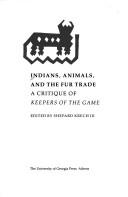
The ecological Indian
- Pages
- 319
- 5 editions
- First published
- 1999
- 1 language
Join or log in to shelve and rate Free, no password.
Overview
"While many Americans are attached to a romantic, idealized view of the human relation to nature in North America prior to European contact, anthropologist Shepard Krech III attempts to examine what characterized actual Native American beliefs and actions. Native Americans had a vast and impressive store of knowledge about the natural world but, like everyone else, couldn't always foresee the consequences of their acts and didn't always act the way they believed they should.
Nor were their beliefs always perfectly adaptive to changing circumstances."--BOOK JACKET.
"The Ecological Indian addresses such fascinating questions as: Were Pleistocene-era humans responsible for the extinction of large mammals like the mastodon? Did the Hohokam of Arizona destroy their society by overirrigating and ultimately oversalinating their crops? What role did Native Americans play in the near-extinctions of the deer, the beaver, and the buffalo? How did Native Americans use fire?
Was the natural "Eden" that awed the first European visitors a feature of native "environmentalism" or just of very low population density?"--BOOK JACKET.
Ratings & reviews
Log in to rate or review this book.
No written reviews yet.
Discussions
Talk about this book with other readers.
Log in to start a discussion.
No discussions yet.
Editions


Details & links
- First published
- 1999
- Pages
- 319
- Languages
- Available in 1 language
Where to buy this book: see “Buy this book”
More about this book
Read a sample, borrow it or see other editions → openlibrary.org