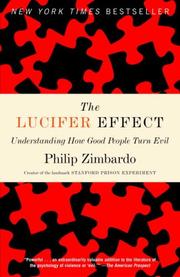
The Lucifer effect
- Pages
- 551
- 1 edition
- First published
- 2007
- 1 language
Join or log in to shelve and rate Free, no password.
Overview
What makes good people do bad things? Where is the line separating good from evil, and who is in danger of crossing it? Social psychologist Philip Zimbardo explains how--and the myriad reasons why--we are all susceptible to the lure of "the dark side." Drawing on examples from history as well as his own research, Zimbardo details how situational forces and group dynamics can work in concert to make monsters out of decent people. By illuminating the psychological causes behind such disturbing metamorphoses, Zimbardo enables us to better understand a variety of phenomena, from corporate malfeasance to organized genocide. He replaces the long-held notion of the "bad apple" with that of the "bad barrel"--The idea that the social setting and the system contaminate the individual, rather than the other way around. Yet we are capable of resisting evil, he argues, and can even teach ourselves to act heroically.--From publisher description.
Includes information on Abu Ghraib Prison, Achilles as archetypal war hero, administrative evil, Afghanistan, anonymity, Army Reserve Military Police (MPs), Britain, Bush administration, bystander intervention, Central Intelligence Agency (CIA), Dick Cheney, conformity, corporations, U.S. Department of Defense (DOD), dehumanization, deindividuation, doctors, Lynndie England, evil, Ivan (Chip) Frederick, II, genocide, good, Charles Graner, Guantanamo Bay Prison, heroism, Adolf Hitler, Holocaust, human nature, Saddam Hussein, identity, inaction as force for evil, International Committee of the Red Cross, Iraq, Iraq War, Katrina hurricane disaster as crisis of inaction, persuasive uses of language, Lord of the Flies (Golding), lynchings, Military Intelligence (MI), moral disengagement, My Lai massacre, national security, U.S. Navy, Nazis, New York City, 1984 (Orwell), obedience to authority, otherness, Pentagon, Peopleʼs Temple cult, personal responsibility, power systems, prejudice, prisons, rape, role playing, rules, Donald Rumsfeld, situational forces, sleep deprivation, social approval, social influence, social psychology, Stanford Prison Experiment (SPE) http://www.prisonexperiment.org, Taguba Report, torture, transformation of character, Vietnam War, violence, war, war on terror, whistle-blowers, women, World War II, etc.
Ratings & reviews
Log in to rate or review this book.
No written reviews yet.
Discussions
Talk about this book with other readers.
Log in to start a discussion.
No discussions yet.
Editions

Details & links
- First published
- 2007
- Pages
- 551
- Languages
- Available in 1 language
Where to buy this book: see “Buy this book”
More about this book
Read a sample, borrow it or see other editions → openlibrary.org