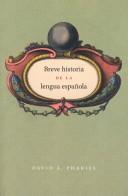
Breve historia de la lengua española
- Pages
- 248
- 4 editions
- First published
- 2007
- 1 language
Join or log in to shelve and rate Free, no password.
Overview
Spanish is the fourth most widely spoken language in the world and a language of ever-increasing importance in the United States. In what will likely become the introduction to the history of the Spanish language, David Pharies clearly and concisely charts the evolution of Spanish from its Indo-European roots to its present form. An internationally recognized expert on the history and development of this language, Pharies brings to his subject a precise sense of what students of Spanish linguistics need to know. After introductory chapters on what it means to study the history of a language, the concept of linguistic change, and the nature of language families, Pharies traces the development of Spanish from its Latin roots, all with the minimum amount of technical language possible. In the core sections of the book, readers are treated to an engaging and remarkably succinct presentation of the genealogy and development of the language, including accounts of the structures and peculiarities of Latin, the historical and cultural events that deeply influenced the shaping of the language, the nature of Medieval Spanish, the language myths that have become attached to Spanish, and the development of the language beyond the Iberian Peninsula, especially in the Americas. Focusing on the most important facets of the language's evolution, this compact work makes the history of Spanish accessible to anyone with a knowledge of Spanish and a readiness to grasp basic linguistic concepts. - Publisher.
Ratings & reviews
Log in to rate or review this book.
No written reviews yet.
Discussions
Talk about this book with other readers.
Log in to start a discussion.
No discussions yet.
Editions


Details & links
- First published
- 2007
- Pages
- 248
- Languages
- Available in 1 language
Where to buy this book: see “Buy this book”
More about this book
Read a sample, borrow it or see other editions → openlibrary.org