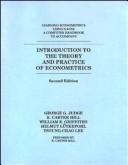
Introduction to Multiple Time Series Analysis
- Pages
- 545
- 5 editions
- First published
- 1991
- 1 language
Join or log in to shelve and rate Free, no password.
Overview
This graduate level textbook deals with analyzing and forecasting multiple time series. It considers a wide range of multiple time series models and methods. The models include vector autoregressive, vector autoregressive moving average, cointegrated, and periodic processes as well as state space and dynamic simultaneous equations models. Least squares, maximum likelihood, and Bayesian methods are considered for estimating these models. Different procedures for model selection or specification are treated and a range of tests and criteria for evaluating the adequacy of a chosen model are introduced. The choice of point and interval forecasts is considered and impulse response analysis, dynamic multipliers as well as innovation accounting are presented as tools for structural analysis within the multiple time series context. This book is accessible to graduate students in business and economics. In addition, multiple time series courses in other fields such as statistics and engineering may be based on this book. Applied researchers involved in analyzing multiple time series may benefit from the book as it provides the background and tools for their task. It enables the reader to perform his or her analyses in a gap to the difficult technical literature on the topic.
Ratings & reviews
Log in to rate or review this book.
No written reviews yet.
Discussions
Talk about this book with other readers.
Log in to start a discussion.
No discussions yet.
Editions


Details & links
- First published
- 1991
- Pages
- 545
- Languages
- Available in 1 language
Where to buy this book: see “Buy this book”
More about this book
Read a sample, borrow it or see other editions → openlibrary.org