The specter of communism
- Pages
- 147
- 1 edition
- First published
- 1994
- 1 language
Join or log in to shelve and rate Free, no password.
Overview
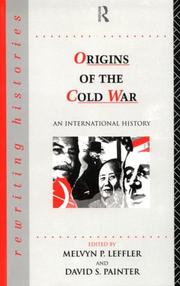
Melvyn Leffler's succinct and important new analysis of the origins of the Cold War begins with the outbreak of the Bolshevik Revolution in 1917: ideological animosity between the Soviet Union and the United States existed from the moment Lenin seized power.
Leffler traces the importance of the intricate connection between America's economic development and the growth of the U.S.S.R. as the world's other great power; in focusing on how America perceived the Soviet threat to its free capitalist economy and political culture, he suggests new ways to understand the dangerous postwar confrontation we call the Cold War. Stalin's brutality, cynicism, and ideological antipathy to the West did not easily translate into a consistent revolutionary foreign policy - he oscillated between cautious defensiveness and pragmatic opportunism - and his unpredictable efforts to safeguard Soviet security and Bolshevik rule accentuated American anxieties.
But U.S. policy, too, had its inconsistencies, and Leffler's insightful analysis (based on newly available Soviet records as well as American archives) gives a superb account of the interaction between the two.
Ratings & reviews
Log in to rate or review this book.
No written reviews yet.
Discussions
Talk about this book with other readers.
Log in to start a discussion.
No discussions yet.
Editions

Details & links
- First published
- 1994
- Pages
- 147
- Languages
- Available in 1 language
Where to buy this book: see “Buy this book”
More about this book
Read a sample, borrow it or see other editions → openlibrary.org