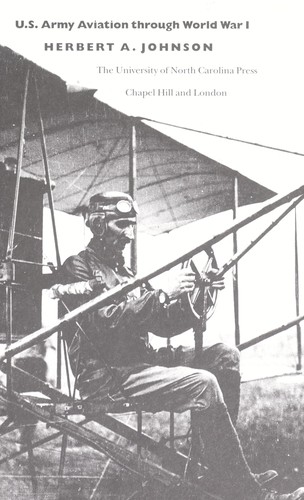
Wingless eagle
- Pages
- 298
- 1 edition
- First published
- 2001
- 1 language
Join or log in to shelve and rate Free, no password.
Overview
"At the start of the twentieth century the United States led the world in advances in aviation, with the first successful engine-powered flights at Kitty Hawk, North Carolina, and Dayton, Ohio, beginning in 1903. Fifteen years later, however, American airmen flew European-designed aircraft because American planes were woefully inadequate for service on the Western Front. Why was the United States so poorly prepared to engage in aerial combat in World War I?".
"To answer this question, Herbert Johnson takes a look at the early years of U.S. military aviation, exploring the cultural, technical, political, and organizational factors that stunted its evolution.
Among the themes he traces are a chronic lack of government funding for military aeronautics, intraservice conflict over control of the aviation program, and the disruptive influence of a civilian "aeronaut constituency" both on military discipline and on Congressional and public attitudes toward army aviation.
Public misunderstanding was further fueled by the army's vacillation between lighter-than-air and heavier-than-air weapon systems, Johnson says, and public opinion was repelled by high-risk exhibition flying and revelations of negligence and favoritism in the Signal Corps's management of the aviation program."--BOOK JACKET.
Ratings & reviews
Log in to rate or review this book.
No written reviews yet.
Discussions
Talk about this book with other readers.
Log in to start a discussion.
No discussions yet.
Editions
-
Format not known University of North Carolina Press 2001 298 pages English ISBN 9780807826270 Open Library

Details & links
- First published
- 2001
- Pages
- 298
- Languages
- Available in 1 language
Where to buy this book: see “Buy this book”
More about this book
Read a sample, borrow it or see other editions → openlibrary.org