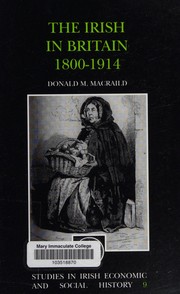
Irish migrants in modern Britain, 1750-1922
- Pages
- 230
- 2 editions
- First published
- 1999
- 1 language
Join or log in to shelve and rate Free, no password.
Overview
Ireland was unique among European countries in having a smaller population at the beginning of the twentieth century than it had 100 years previously. This demographic decline was prompted by a series of social and economic factors, from changing fertility rates and pressure upon land to the impact of the Great Famine (1845-50) and the emergence of a culture of mass emigration.
An important aspect of this story concerns those who settled in Britain and the often adverse reactions to them. Emigration affected Ireland deeply, but it also had an important impact upon the way Britain perceived itself in this period. Donald MacRaild studies the impact of immigration throughout the period from 1750, as Ireland became an increasingly full (though disadvantaged) part of the United Kingdom, to the final parting of the ways in 1922, when the Irish Free State was formed.
Ratings & reviews
Log in to rate or review this book.
No written reviews yet.
Discussions
Talk about this book with other readers.
Log in to start a discussion.
No discussions yet.
Editions


Details & links
- First published
- 1999
- Pages
- 230
- Languages
- Available in 1 language
Where to buy this book: see “Buy this book”
More about this book
Read a sample, borrow it or see other editions → openlibrary.org