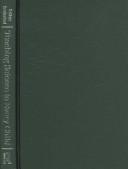
Teaching science to every child
- Pages
- 383
- 1 edition
- First published
- 2012
- 1 language
Join or log in to shelve and rate Free, no password.
Overview
"Providing timely and practical guidance about teaching science to all students, this text gives particular emphasis to making science accessible to populations who are typically pushed to the fringe, especially students of color and English language learners. Central to this text is the idea that science can be viewed as a culture, including specific methods of thinking, particular ways of communicating, and specialized kinds of tools. By using culture as a starting point and connecting it to effective instructional approaches, this text gives elementary and middle school science teachers a valuable framework to support the science learning of every student. Changes in the Second Edition: Three new chapters; technological tools and resources embedded throughout each chapter; increased attention to the role of theory as it relates to science teaching and learning; expanded use of science process skills; updated and expanded Companion Website www.routledge.com/textbooks/9780415892582"-- Provided by publisher.
"Teaching Science to Every Child provides timely and practical guidance about teaching science to all students. Particular emphasis is given to making science accessible to students who are typically pushed to the fringe - especially students of color and English language learners. Central to this text is the idea that science can be viewed as a culture, including specific methods of thinking, particular ways of communicating, and specialized kinds of tools. By using culture as a starting point and connecting it to effective instructional approaches, this text gives elementary and middle school science teachers a valuable framework to support the science learning of every student. Written in a conversational style, it treats readers as professional partners in efforts to address vital issues and implement classroom practices that will contribute to closing achievement gaps and advancing the science learning of all children. Features include "Point/Counterpoint" essays that present contrasting perspectives on a variety of science education topics; explicit connections between National Science Education Standards and chapter content; and chapter objectives, bulleted summaries, key terms; reflection and discussion questions. Additional resources are available on the updated and expanded Companion Website www.routledge.com/textbooks/9780415892582 Changes in the Second Edition Three entirely new chapters: Integrated Process Skills; Learning and Teaching; Assessment Technological tools and resources embedded throughout each chapter Increased attention to the role of theory as it relates to science teaching and learning Expanded use of science process skills for upper elementary and middle school Additional material about science notebooks "-- Provided by publisher.
Ratings & reviews
Log in to rate or review this book.
No written reviews yet.
Discussions
Talk about this book with other readers.
Log in to start a discussion.
No discussions yet.
Editions

Details & links
- First published
- 2012
- Pages
- 383
- Languages
- Available in 1 language
Where to buy this book: see “Buy this book”
More about this book
Read a sample, borrow it or see other editions → openlibrary.org