Philosophy & ReligionPsychology & Self-Help
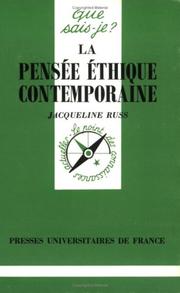
La psychologie morale
- Pages
- 127
- 3 editions
- First published
- 1989
- 1 language
Join or log in to shelve and rate Free, no password.
Overview
Generally speaking, morality is a set of rules guiding the behavior of an individual in his personal and social life. The question, for the psychologist, is to know how these rules install themselves in consciousness. If they came only from the social environment, by learning or conformity, morality would change as one crosses a river, as Pascal mentions ironically.
Those, in turn, who are looking for more universal moral principles consider morality as a system of elementary rules and duties. Unlike legal norms, moral norms only put a general frame to action: every case is specific, and individuals are not simply interchangeable. Further, as Bunge observes, legal systems put more stress on rights than on duties (there is a declaration of human rights but no declaration of human obligations), whereas morality puts stress on obligations. Aristotle already noted that morality rules elementary behavior and is spoken in words like "you must, should, need...", whereas law rules what each one gets.
Ratings & reviews
Log in to rate or review this book.
No written reviews yet.
Discussions
Talk about this book with other readers.
Log in to start a discussion.
No discussions yet.
Editions
-
Paperback Presses Universitaires de France - PUF 1996 127 pages French ISBN 9782130423874 Open Library
-
Format not known Presses universitaires de France 1989 127 pages French ISBN 9782130423874 Open Library
-
Format not known Presses universitaires de France 1989 127 pages French ISBN 9782130423874 Open Library

Details & links
- First published
- 1989
- Pages
- 127
- Languages
- Available in 1 language
Where to buy this book: see “Buy this book”
More about this book
Read a sample, borrow it or see other editions → openlibrary.org