Framing the Early Middle Ages
- Pages
- 1,018
- 7 editions
- First published
- 2005
- 2 languages
Join or log in to shelve and rate Free, no password.
Overview
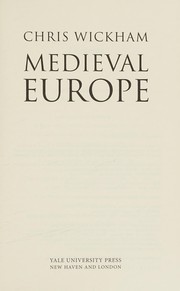
The Roman empire tends to be seen as a whole whereas the early middle ages tends to be seen as a collection of regional histories, roughly corresponding to the land-areas of modern nation states. As a result, early medieval history is much more fragmented. In recent decades, the rise of early medieval archaeology has also transformed our source-base, but this has not been adequately integrated into analyses of documentary history in almost any country. This book integrates documentary and archaeological evidence together, and provides a history of the period 400—800, by means of systematic comparative analyses of each of the regions of the latest Roman and immediately post-Roman world, from Denmark to Egypt (only the Slav areas are left out). The book concentrates on classic socio-economic themes, state finance, the wealth and identity of the aristocracy, estate management, peasant society, rural settlement, cities, and exchange. These are only a partial picture of the period, but they are intended as a framing for other developments, without which those other developments cannot be properly understood. The book argues that only a complex comparative analysis can act as the basis for a wider synthesis. The book takes all different developments as typical, and constructs a synthesis based on a better understanding of difference and the reasons for it.
Ratings & reviews
Log in to rate or review this book.
No written reviews yet.
Discussions
Talk about this book with other readers.
Log in to start a discussion.
No discussions yet.
Editions


Details & links
- First published
- 2005
- Pages
- 1018
- Languages
- Available in 2 languages
Where to buy this book: see “Buy this book”
More about this book
Read a sample, borrow it or see other editions → openlibrary.org