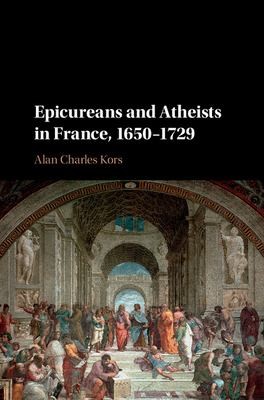
Epicureans and Atheists in France, 1650-1729
- Pages
- 242
- 3 editions
- First published
- 2016
- 1 language
Join or log in to shelve and rate Free, no password.
Overview
"Atheism was the most foundational challenge to early-modern French certainties. Theologians and philosophers labelled such atheism as absurd, confident that neither the fact nor behaviour of nature was explicable without reference to God. The alternative was a categorical naturalism, whose most extreme form was Epicureanism. The dynamics of the Christian learned world, however, which this book explains, allowed the wide dissemination of the Epicurean argument. By the end of the seventeenth century, atheism achieved real voice and life. This book examines the Epicurean inheritance and explains what constituted actual atheistic thinking in early-modern France, distinguishing such categorical unbelief from other challenges to orthodox beliefs. without understanding the actual context and convergence of the inheritance, scholarship, protocols, and polemical modes of orthodox culture, the early-modern generation and dissemination of atheism are inexplicable. This book brings to life both early-modern French Christian learned culture and the atheists who emerged from its intellectual vitality."--P. [i].
Ratings & reviews
Log in to rate or review this book.
No written reviews yet.
Discussions
Talk about this book with other readers.
Log in to start a discussion.
No discussions yet.
Editions

Details & links
- First published
- 2016
- Pages
- 242
- Languages
- Available in 1 language
Where to buy this book: see “Buy this book”
More about this book
Read a sample, borrow it or see other editions → openlibrary.org