Philoponus
- Pages
- 182
- 5 editions
- First published
- 1987
- 1 language
Join or log in to shelve and rate Free, no password.
Overview
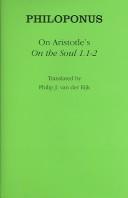
"These chapters of Aristotle's treatise are about physical interactions. In his innovative commentary, Philoponus discusses Aristotle's idea that certain qualities of the elements are basic. In what way are they basic? he asks. To what extent can the other qualities be reduced to the basic ones? And if the other qualities depend on the basic ones, how is it that they can vary independently of each other when the basic qualities change? Philoponus develops the idea that the other qualities merely supervene on the basic ones, rather than resulting from them. Moreover, physical qualities admit of different ranges of variation, and so have different thresholds at which they appear or disappear. Philoponus also discusses Aristotle's idea that the elements and their basic qualities survive potentially when mixed together. He explains this by drawing a third sense of 'potential' out of Aristotle's texts to take the place of the two senses which Aristotle explicitly recognises. Philoponus adds further restrictions to Aristotle's principles of causation. Black can contaminate white, but the black in ebony does not have the right matter for affecting the white of milk. He asks why fluids can affect each other more easily than solids. In every case, Philoponus takes Aristotle's discussions further, and his ideas on the dependence of some qualities on others are very relevant to the continuing philosophical debate on the subject."--Bloomsbury Publishing
These chapters of Aristotle's treatise are about physical interactions. In his innovative commentary, Philoponus discusses Aristotle's idea that certain qualities of the elements are basic. In what way are they basic? he asks. To what extent can the other qualities be reduced to the basic ones? And if the other qualities depend on the basic ones, how is it that they can vary independently of each other when the basic qualities change? Philoponus develops the idea that the other qualities merely supervene on the basic ones, rather than resulting from them. Moreover, physical qualities admit of different ranges of variation, and so have different thresholds at which they appear or disappear. Philoponus also discusses Aristotle's idea that the elements and their basic qualities survive potentially when mixed together. He explains this by drawing a third sense of 'potential' out of Aristotle's texts to take the place of the two senses which Aristotle explicitly recognises. Philoponus adds further restrictions to Aristotle's principles of causation. Black can contaminate white, but the black in ebony does not have the right matter for affecting the white of milk. He asks why fluids can affect each other more easily than solids. In every case, Philoponus takes Aristotle's discussions further, and his ideas on the dependence of some qualities on others are very relevant to the continuing philosophical debate on the subject.
Ratings & reviews
Log in to rate or review this book.
No written reviews yet.
Discussions
Talk about this book with other readers.
Log in to start a discussion.
No discussions yet.
Editions

Details & links
- First published
- 1987
- Pages
- 182
- Series
- Ancient commentators on Aristotle
- Languages
- Available in 1 language
Where to buy this book: see “Buy this book”
More about this book
Read a sample, borrow it or see other editions → openlibrary.org