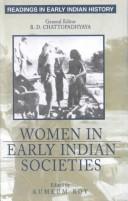
The emergence of monarchy in North India, eighth-fourth centuries B.C
- Pages
- 344
- 2 editions
- First published
- 1994
- 1 language
Join or log in to shelve and rate Free, no password.
Overview
This book explores the institutionalization of relationships of power in early north India. It does this by an analysis of myths, rituals and prescriptions embedded in the brahmanical tradition. Dr Roy argues that monarchy acquires centrality in a situation where contending definitions of power coexist. She traces the problems that are inherent in attempting to valorize a single possibility within such a situation, and the resolutions which are envisaged.
In the process, alternative definitions of power relations are analysed in terms of their material, social, and ritual or ideological bases. Thus, monarchy is located within a range of possible power relationships, instead of being viewed as an isolated, unique institution.
.
On another level, the author focuses on the broader social context, including the growing emphasis on varna identities, and on a particular pattern of householding typified by the patriarchal grah. She suggests that the relationship between this context and monarchy was a two-way process: while the raja tried to intervene in and control society, more often than not the specific form of such interventions was delimited and constrained by the concerns of dominant social categories.
In other words, the emergence of monarchy is viewed not as an imposition from above, but as the result of a complex process of social change.
Ratings & reviews
Log in to rate or review this book.
No written reviews yet.
Discussions
Talk about this book with other readers.
Log in to start a discussion.
No discussions yet.
Editions

Details & links
- First published
- 1994
- Pages
- 344
- Languages
- Available in 1 language
Where to buy this book: see “Buy this book”
More about this book
Read a sample, borrow it or see other editions → openlibrary.org